
Three Decades of Discovery: Unpacking Senescence-Associated Beta-Galactosidase
Some links in this article are affiliate links. As an Amazon Associate and partner of other programs, Vitalheros may earn a commission from qualifying purchases, at no extra cost to you. This never influences our editorial coverage.
In the intricate tapestry of human biology, aging remains one of the most profound and complex processes. For decades, scientists have sought to understand its fundamental mechanisms, driven by the desire to extend not just lifespan, but also healthspan. A significant turning point in this quest occurred three decades ago with the discovery of senescence-associated beta-galactosidase (SA-β-gal), a biomarker that has since become an indispensable tool in the study of cellular senescence and its role in aging and disease.
This enzyme’s identification didn’t just provide a marker; it opened a crucial window into the very cells that contribute to our decline, sparking an explosion of research that continues to redefine our understanding of longevity.
The Enigma of Cellular Senescence
To appreciate the impact of SA-β-gal, one must first grasp the concept of cellular senescence. Imagine cells that, instead of dividing and replicating as healthy cells do, enter a state of permanent growth arrest. These are senescent cells (SNCs). They’re not dead, but they’re no longer performing their normal functions. Initially, this state was thought of primarily as a protective mechanism – a way for damaged cells, particularly those with DNA damage or oncogenic mutations, to stop proliferating and potentially becoming cancerous.
However, scientists have increasingly recognized a more complex, dual nature to senescent cells. While they play beneficial roles in early development, wound healing, and tumor suppression, their accumulation with age can become detrimental. These older, persistent senescent cells often secrete a potent mix of pro-inflammatory cytokines, chemokines, growth factors, and proteases – collectively known as the Senescence-Associated Secretory Phenotype (SASP). This SASP can disrupt the normal function of surrounding tissues, foster chronic inflammation, and contribute to a wide array of age-related diseases.
SA-β-gal: A Lighthouse in the Cellular Sea
Before the discovery of SA-β-gal, identifying senescent cells was a challenging endeavor, often relying on a combination of morphological changes and the absence of proliferation markers. It was a laborious and often imprecise process. The breakthrough came with the realization that senescent cells exhibit elevated lysosomal content and, crucially, increased activity of a specific form of beta-galactosidase at a suboptimal pH (typically pH 6.0).
This enzyme, SA-β-gal, became a relatively simple and reliable biochemical marker. When a specific substrate, X-gal, is introduced, it is cleaved by SA-β-gal, producing an insoluble blue precipitate that can be easily visualized under a microscope. This distinctive blue staining provided researchers with a clear, quantifiable way to identify senescent cells in culture and, later, in tissues.
The discovery of SA-β-gal provided an accessible and reliable biomarker, transforming the landscape of senescence research and accelerating our ability to study aging at a cellular level.
Three Decades of Unprecedented Progress
The advent of SA-β-gal as a biomarker catalyzed three decades of unparalleled progress in the field of aging research. Its impact can be seen across several key areas:
Quantifying Senescence and Understanding its Distribution
With a clear marker, researchers could more accurately quantify the number of senescent cells in various tissues and organs as organisms aged. This led to a deeper understanding of where and when senescent cells accumulate, revealing their presence in virtually all tissues and their increase with chronological age and in response to various stressors like radiation, chemotherapy, and oxidative stress.
Connecting Senescence to Age-Related Diseases
The ability to identify senescent cells allowed scientists to establish strong correlations between their accumulation and the progression of numerous age-related pathologies. Studies began to link SNCs to conditions such as:
- Cardiovascular disease: In atherosclerotic plaques and heart failure.
- Neurodegenerative diseases: In the brains of individuals with Alzheimer’s and Parkinson’s.
- Metabolic disorders: Contributing to type 2 diabetes and obesity.
- Cancer: While initially tumor suppressive, persistent SNCs can create a pro-tumorigenic microenvironment.
- Fibrosis: In organs like the lung, liver, and kidney.
- Osteoarthritis: In joint tissues.
Paving the Way for Senotherapeutics
Perhaps one of the most exciting developments spurred by SA-β-gal’s discovery is the rise of senotherapeutics – drugs designed to target and eliminate senescent cells (senolytics) or to modulate their secretory phenotype (senomorphics). With a reliable marker to identify the target cells, researchers could develop and test compounds that specifically cleared SNCs. Early studies using senolytics in animal models have shown promising results, demonstrating improvements in various age-related conditions, from physical function to cognitive health, and even extending healthy lifespan.
Unraveling the Senescence-Associated Secretory Phenotype (SASP)
The ability to isolate and study senescent cells more effectively also accelerated research into the SASP. Scientists could analyze the complex cocktail of molecules secreted by these cells, leading to a profound understanding of how SNCs communicate with their environment and drive inflammation and tissue dysfunction. This understanding is crucial for developing senomorphics that aim to neutralize the harmful effects of the SASP without necessarily killing the senescent cells.
Challenges and Future Directions
While SA-β-gal has been a cornerstone, it’s not without its limitations. It’s an activity-based marker, meaning its detection can be influenced by cellular context and metabolic state, and it’s not always perfectly specific to senescent cells in all scenarios. This has led to the development of other, complementary senescence markers and a push for more precise in vivo detection methods.
Nevertheless, the foundational understanding provided by SA-β-gal remains invaluable. Future research continues to build upon this discovery, exploring more targeted delivery of senotherapeutics, understanding the heterogeneity of senescent cell populations, and developing even more sophisticated tools to monitor and manipulate cellular senescence for human health and longevity.
A Cornerstone for Longevity Science
The discovery of senescence-associated beta-galactosidase three decades ago was more than just finding an enzyme; it was finding a key to unlock a deeper understanding of the aging process itself. It transformed cellular senescence from a theoretical concept into a tangible, measurable phenomenon, empowering researchers to connect it directly to age-related diseases and to develop innovative strategies to combat them. As we look to the future, SA-β-gal continues to serve as a beacon, guiding the ongoing quest to extend healthy human lifespan and enhance the quality of our later years.
Explore more in our Digital Health coverage.
🔬 Scientific Takeaway
The discovery of senescence-associated beta-galactosidase (SA-β-gal) three decades ago provided the first widely adopted and reliable biomarker for identifying senescent cells. This breakthrough was pivotal, enabling researchers to quantify senescent cell accumulation, establish their causal links to age-related diseases, and accelerate the development of senolytic and senomorphic therapies. SA-β-gal remains a cornerstone in the ongoing quest to understand and mitigate the cellular mechanisms of aging.
Sources & References
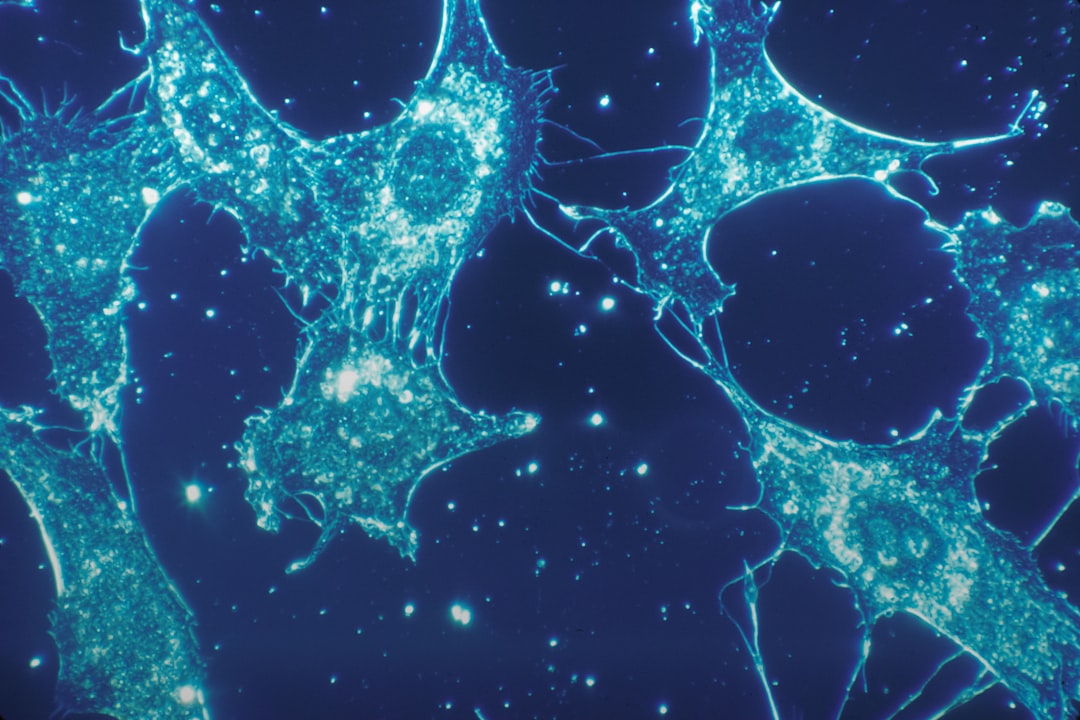
Photo by National Cancer Institute on Unsplash.
Medical Disclaimer: This article is AI-assisted and reviewed by the Vitalheros editorial team. It is provided for informational purposes only and is not a substitute for professional medical advice, diagnosis, or treatment. Always consult a qualified healthcare provider. Reviewed by The Vitalheros Editorial Team.