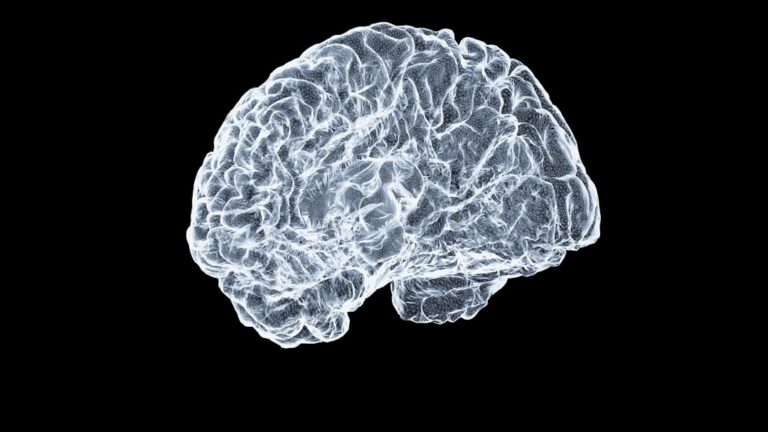
Brain Protein Menin: A New Target for Age-Related Decline?
Some links in this article are affiliate links. As an Amazon Associate and partner of other programs, Vitalheros may earn a commission from qualifying purchases, at no extra cost to you. This never influences our editorial coverage.
The quest to understand and mitigate the effects of aging is one of humanity’s most enduring scientific challenges. While many factors contribute to our journey through life, emerging research continues to highlight the brain’s central role, not just as a recipient of age-related changes, but as a potential driver of them. A recent discovery points to a specific protein in a crucial brain region, the hypothalamus, as a surprising new player in the aging process.
This groundbreaking work suggests that declining levels of a protein called Menin in the hypothalamus may trigger a cascade of age-related issues. Intriguingly, restoring this protein, and even supplementing with a common amino acid, showed promising results in preclinical models, offering a fresh perspective on how we might approach the fight against age-related decline.
The Hypothalamus: A Master Conductor of Life and Longevity
Often overlooked in popular discussions about brain health, the hypothalamus is a small but mighty region nestled deep within the brain. Far from being a mere structural component, it acts as a central command center, orchestrating a vast array of vital bodily functions. From regulating hunger, thirst, and body temperature to controlling sleep-wake cycles and stress responses, its influence is pervasive.
Beyond these immediate physiological roles, scientists have increasingly recognized the hypothalamus’s profound impact on systemic aging. Evidence suggests that dysfunction in this region can send signals throughout the body, accelerating age-related changes in various organs and tissues. It acts like a master conductor, and when its rhythm falters, the entire orchestra of the body can fall out of tune.
Connecting Brain Health to Systemic Aging
The intricate network of the hypothalamus allows it to communicate with the endocrine system, influencing hormone production, and with the autonomic nervous system, impacting everything from metabolism to inflammation. This widespread connectivity makes it a prime candidate for a central regulator of longevity. Understanding how age affects the hypothalamus, and conversely, how its health influences aging, is therefore a critical avenue for longevity research.
Menin: A Novel Player in the Aging Brain
The recent findings introduce Menin, a protein previously recognized for its role in cell growth and tumor suppression, into the complex narrative of aging. Researchers observed that as subjects aged, the levels of Menin specifically within the hypothalamus began to decline. This reduction was not merely an incidental observation; it appeared to be a significant trigger.
When Menin levels dropped, a cascade of detrimental effects was noted in the studied animal models. These included:
- Increased inflammation: A hallmark of aging, chronic low-grade inflammation contributes to numerous age-related diseases.
- Cognitive impairment: Subjects exhibited memory problems, suggesting a direct link to brain function.
- Bone density loss: Weakening bones are a common and debilitating aspect of aging, highlighting the systemic reach of hypothalamic changes.
- Other age-related changes: The decline in Menin was associated with a broader spectrum of physiological changes typically seen with advancing age.
What makes this discovery particularly compelling is the subsequent intervention. When researchers actively restored Menin levels in the hypothalamus of these aging models, several of these age-related markers showed significant reversal. This suggests that Menin isn’t just a bystander in aging but potentially an active participant, and a target for intervention.
D-Serine: A Cognitive Boost and Potential Pathway
Adding another layer to this intriguing discovery, the research also explored the impact of a simple amino acid supplement: D-serine. D-serine is a naturally occurring amino acid that plays a role in neurotransmission, particularly in activating NMDA receptors, which are crucial for learning and memory.
In the context of this study, supplementation with D-serine was observed to boost cognition in the animal models. While the precise interplay between D-serine and Menin is still being elucidated, this finding opens up a fascinating parallel or complementary avenue for addressing age-related cognitive decline. It suggests that modulating specific neurochemical pathways could offer benefits, potentially independent of, or in conjunction with, directly targeting Menin levels.
“This research illuminates a novel brain-centric pathway influencing aging, offering fresh targets for intervention. While promising, these findings are foundational and necessitate extensive future studies to translate into human health strategies.”
Broader Implications for Longevity Research
This research underscores a critical shift in how we understand aging. It reinforces the idea that aging is not solely a process of cellular wear and tear in isolated tissues, but a highly coordinated, brain-regulated phenomenon. By identifying specific proteins like Menin within key brain regions, scientists are beginning to unravel the intricate signaling pathways that govern our lifespan and healthspan.
The implications are substantial. If specific brain proteins can indeed act as master switches for age-related changes, then developing therapies that target these proteins could represent a powerful new strategy for promoting healthy longevity. This could range from pharmacological interventions that modulate protein levels to dietary or lifestyle approaches that support hypothalamic health.
Future Directions and Critical Cautions
While these findings are undeniably exciting, it is crucial to emphasize that this research was conducted in animal models. The journey from discovery in mice to validated human therapies is often long and complex. Human physiology can differ significantly, and what works in a preclinical setting may not translate directly to humans.
Future research will need to focus on:
- Validating findings in humans: Are Menin levels in the human hypothalamus also linked to aging?
- Understanding mechanisms: How exactly does Menin exert its effects on inflammation, memory, and bone health?
- Developing targeted therapies: Can safe and effective compounds be developed to modulate Menin or D-serine pathways in humans?
- Long-term safety: Any potential intervention would require rigorous testing for long-term safety and efficacy.
For individuals, it’s important to remember that this research does not currently support the use of D-serine or any other supplement as an anti-aging treatment. Any decisions regarding supplementation or health interventions should always be made in consultation with a qualified healthcare professional.
Nevertheless, this discovery offers a compelling glimpse into the future of longevity medicine. By uncovering the hidden drivers of aging within our own brains, we move one step closer to developing intelligent, targeted strategies to foster healthier, longer lives.
Explore more in our Nutrition & Performance coverage.
🔬 Scientific Takeaway
Recent research in animal models has identified a brain protein, Menin, in the hypothalamus as a potential driver of aging. Declining Menin levels were linked to increased inflammation, memory problems, and bone loss, while restoring Menin reversed some of these effects. Separately, supplementation with the amino acid D-serine was observed to boost cognition, suggesting new avenues for addressing age-related decline via brain-centric pathways.
Sources & References
Photo by Milad Fakurian on Unsplash.
Medical Disclaimer: This article is AI-assisted and reviewed by the Vitalheros editorial team. It is provided for informational purposes only and is not a substitute for professional medical advice, diagnosis, or treatment. Always consult a qualified healthcare provider. Reviewed by The Vitalheros Editorial Team.