The Age-Old Mystery of Muscle Repair: A Protein’s Dual Role
Some links in this article are affiliate links. As an Amazon Associate and partner of other programs, Vitalheros may earn a commission from qualifying purchases, at no extra cost to you. This never influences our editorial coverage.
Our muscles are remarkable structures, constantly adapting, growing, and healing throughout our lives. Yet, with each passing decade, the efficiency of this intricate system begins to wane. Injuries take longer to mend, and the vibrant strength of youth gradually diminishes. This age-related decline in muscle mass and function, known as sarcopenia, is a significant challenge to healthy longevity. For years, scientists have sought to understand why older muscles heal more slowly, and recent research has unveiled a surprising and paradoxical culprit: a protein with a dual identity.
The Architects of Muscle Regeneration
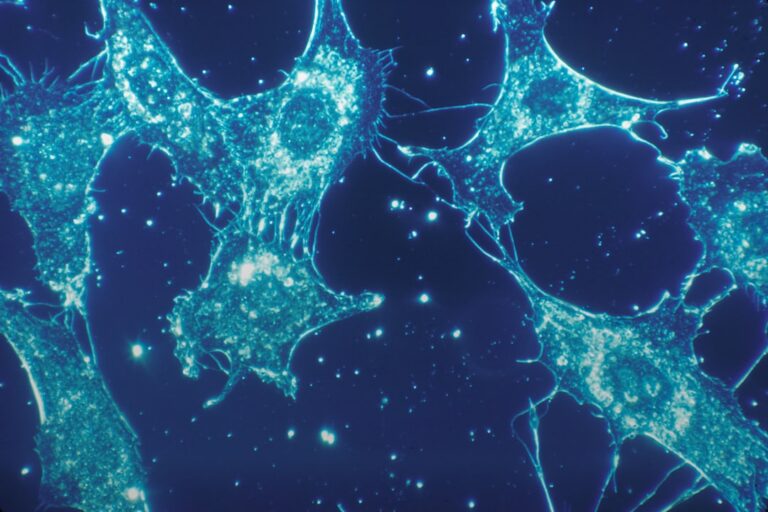
At the heart of our muscles’ ability to repair themselves are specialized cells known as muscle stem cells, or satellite cells. These dormant powerhouses reside quietly along the muscle fibers, poised for action. When a muscle sustains an injury – be it from strenuous exercise or an accidental tear – these satellite cells spring to life. They activate, proliferate rapidly, and then differentiate into new muscle cells, fusing together to repair the damaged tissue and restore strength.
In younger individuals, this process is robust and efficient. Satellite cells are plentiful and quick to respond. However, as we age, their performance declines. Older muscle stem cells are often less responsive, slower to divide, and less effective at forming new muscle tissue. This contributes directly to the prolonged recovery times and incomplete healing commonly observed in older adults.
Unveiling a Biological Paradox: The NDRG1 Protein
Scientists at UCLA have recently shed light on a fascinating molecular mechanism contributing to this age-related slowdown. Their research points to a specific protein called NDRG1 (N-Myc downstream regulated gene 1) as a key player in the reduced regenerative capacity of older muscle stem cells.
This discovery highlights a complex biological paradox. While NDRG1 appears to impede the speedy repair of muscle tissue, it simultaneously plays a crucial role in safeguarding the very cells responsible for that repair. It’s a classic example of the intricate trade-offs that can occur within biological systems as they navigate the stresses of aging.
NDRG1: A Brake on Repair
The research indicates that in older muscle stem cells, levels of NDRG1 tend to accumulate. When these elevated levels are present, NDRG1 acts like a molecular brake, significantly slowing down the cells’ ability to transition into repair mode. Normally, upon injury, satellite cells receive signals that prompt them to activate, divide, and begin the repair process. The increased presence of NDRG1 appears to interfere with this rapid activation and proliferation, essentially keeping the cells in a more quiescent or ‘slowed down’ state even when they should be actively repairing.
This ‘braking’ action means that the crucial initial steps of muscle repair – the rapid expansion of the stem cell population and their differentiation into new muscle fibers – are delayed and less vigorous. The result is a less efficient and protracted healing process, leaving older muscles vulnerable and slower to regain their full function after injury.
NDRG1: A Shield for Survival
However, the story of NDRG1 isn’t purely one of hindrance. The same protein that acts as a brake on repair also seems to confer a significant benefit: it helps muscle stem cells survive the cumulative stresses of aging. Throughout a lifetime, cells are exposed to various forms of cellular stress, including oxidative damage, inflammation, and metabolic imbalances. These stressors can lead to cellular dysfunction or even cell death.
The scientists observed that NDRG1 helps older muscle stem cells withstand these age-related challenges, allowing them to persist longer. In essence, while NDRG1 might slow down their immediate ability to fix damage, it also helps ensure that these vital repair cells are still present and viable in older tissues. Without this protective mechanism, the pool of functional muscle stem cells might diminish even more rapidly with age, leading to an even greater deficit in regenerative capacity.
Implications for Future Longevity and Muscle Health
This discovery opens new avenues for understanding and potentially intervening in the aging process of muscles. The dual nature of NDRG1 presents a fascinating challenge: how can we selectively modulate its activity to promote faster healing without compromising its protective functions?
Future research may explore strategies to temporarily reduce NDRG1 levels in muscle stem cells after an injury, allowing them to activate more quickly, then allowing levels to return to normal to maintain their protective role. Such targeted interventions could potentially accelerate recovery from muscle injuries in older adults, improve rehabilitation outcomes, and ultimately contribute to a higher quality of life and greater independence in advanced age.
However, it’s crucial to remember that this is foundational research. Developing therapies based on such complex biological mechanisms is a long and intricate process, requiring extensive further study and rigorous clinical trials.
Empowering Muscle Health Today
While the promise of future molecular interventions is exciting, current evidence strongly supports proactive strategies for maintaining muscle health throughout life. These foundational practices remain paramount:
- Resistance Training: Regular strength training exercises are incredibly effective at stimulating muscle protein synthesis, preserving muscle mass, and improving muscle function at any age.
- Adequate Protein Intake: Consuming sufficient high-quality protein is essential for muscle repair and growth. Older adults may require higher protein intake to counteract age-related anabolic resistance.
- Balanced Nutrition: A diet rich in fruits, vegetables, and whole grains provides essential micronutrients and antioxidants that support overall cellular health and combat inflammation.
- Active Lifestyle: Beyond structured exercise, simply staying active and avoiding prolonged periods of inactivity helps maintain muscle tone and metabolic health.
These lifestyle interventions not only help mitigate sarcopenia but also keep the muscle stem cell population healthier and more responsive, even as the complex molecular dance of proteins like NDRG1 unfolds within them.
The Ongoing Journey of Scientific Understanding
The identification of NDRG1’s dual role in muscle stem cells is a significant step forward in our understanding of aging and regeneration. It underscores the intricate balance that biological systems maintain and the trade-offs that often occur as organisms age. As scientists continue to unravel these complex mechanisms, the hope remains that we can develop increasingly sophisticated strategies to support robust muscle health, allowing individuals to live more active, independent, and vibrant lives well into their later years.
Explore more in our Nutrition & Performance coverage.
🔬 Scientific Takeaway
Recent research identifies the protein NDRG1 as a key factor in the slower muscle repair observed in aging. While NDRG1 accumulates in older muscle stem cells, acting as a "brake" on their regenerative capacity, it also plays a crucial role in enhancing these cells' survival under age-related stress. This biological paradox offers new insights into the mechanisms of muscle aging and potential targets for future interventions.
Sources & References
Photo by Alirio Garcia on Unsplash.
Medical Disclaimer: This article is AI-assisted and reviewed by the Vitalheros editorial team. It is provided for informational purposes only and is not a substitute for professional medical advice, diagnosis, or treatment. Always consult a qualified healthcare provider. Reviewed by The Vitalheros Editorial Team.