Fertility Frontiers: Expanding Options for Childhood Cancer Survivors
Some links in this article are affiliate links. As an Amazon Associate and partner of other programs, Vitalheros may earn a commission from qualifying purchases, at no extra cost to you. This never influences our editorial coverage.
The remarkable progress in pediatric oncology over the past few decades has transformed childhood cancer from a near-certain death sentence into a treatable, and often curable, disease for many. This triumph, however, comes with its own set of challenges. As survival rates climb, the long-term quality of life for these young survivors becomes an increasingly vital focus. Among the most profound and often unspoken consequences of life-saving cancer treatments is their potential impact on future fertility.
For many childhood cancer survivors, the dream of having biological children later in life can be jeopardized by the very therapies that saved them. Chemotherapy, radiation, and certain surgical interventions can damage delicate reproductive organs and cells, leading to infertility. Recognizing this critical need, researchers worldwide are dedicating significant efforts to advancing fertility preservation options, offering a beacon of hope for these individuals and their families.
The Unseen Challenge: Cancer Treatment and Future Fertility
Cancer treatments are designed to eradicate rapidly dividing cancer cells, but they often lack complete specificity. Unfortunately, this means they can also harm healthy, rapidly dividing cells in the body, including those involved in reproduction. The gonads – the testes in males and ovaries in females – are particularly vulnerable.
For girls, chemotherapy and radiation can deplete the ovarian reserve, leading to premature ovarian insufficiency or menopause. For boys, treatments can damage sperm-producing cells within the testes, resulting in azoospermia (absence of sperm). The extent of this damage depends on factors such as the type of cancer, the specific treatment regimen, the patient’s age at treatment, and individual biological responses.
Why Childhood Presents Unique Hurdles
Fertility preservation for adults typically involves freezing mature sperm or eggs. However, for children, especially those who have not yet reached puberty, these conventional methods are often not viable. Pre-pubescent boys do not produce mature sperm, and pre-pubescent girls have immature eggs that cannot be retrieved and frozen using standard techniques. This biological reality has historically limited options for the youngest cancer patients, making the development of novel approaches essential.
Pioneering Pathways: Tissue Cryopreservation
The core of much of the recent advancement lies in the cryopreservation (freezing) of immature reproductive tissue. This innovative approach allows for the preservation of potential fertility before damaging treatments begin, with the hope that the tissue can be matured or transplanted later to restore fertility.
Ovarian Tissue Cryopreservation for Girls
For pre-pubescent girls and young women, ovarian tissue cryopreservation has emerged as a promising technique. This involves surgically removing a small piece of ovarian cortex, the outer layer of the ovary where immature egg follicles reside. This tissue is then frozen and stored. Once the survivor is ready to attempt conception, the tissue can be thawed and transplanted back into the body, often onto the remaining ovary or another site, where it may resume function and produce mature eggs.
While still considered an experimental procedure in some contexts, ovarian tissue cryopreservation has already led to successful pregnancies and live births globally. Ongoing research focuses on improving the viability of the tissue after freezing and transplantation, as well as refining surgical techniques and understanding long-term outcomes.
Testicular Tissue Cryopreservation for Boys
The situation for pre-pubescent boys is particularly complex. Testicular tissue contains spermatogonial stem cells (SSCs), which are the precursors to sperm. The challenge lies in the fact that these cells are immature and cannot produce sperm until puberty. Testicular tissue cryopreservation involves taking a small biopsy of testicular tissue before treatment and freezing it.
The goal is that, in the future, these SSCs can either be matured in vitro (in a laboratory dish) to produce sperm that can be used for assisted reproduction, or the tissue can be transplanted back into the individual to restore natural sperm production. Research in this area is highly active, focusing on techniques to culture and differentiate SSCs effectively and safely, as well as on the safety and efficacy of re-implanting the tissue.
The Horizon of Hope: What Research is Advancing
The advancements in fertility options for childhood cancer survivors are not static; they represent a vibrant and evolving field of medical innovation. Researchers are meticulously working on several fronts to refine existing methods and develop entirely new ones:
- Improved Tissue Viability: Enhancing cryopreservation protocols to ensure more cells survive the freezing and thawing process, leading to better outcomes.
- In Vitro Maturation Techniques: Developing sophisticated laboratory methods to mature immature egg follicles from ovarian tissue or spermatogonial stem cells from testicular tissue into viable gametes, thereby reducing the need for transplantation in some cases.
- Refining Transplantation Methods: Improving surgical techniques for re-implantation of ovarian or testicular tissue to maximize its function and minimize risks.
- Understanding Long-Term Safety and Efficacy: Conducting crucial follow-up studies to assess the safety of these procedures for both the survivor and any future offspring, and to determine the true success rates over time.
- Exploring Novel Therapies: Investigating pharmacological interventions or gene therapies that might protect reproductive organs during cancer treatment or stimulate their recovery afterward.
Navigating the Future: Considerations and Support
For families facing a childhood cancer diagnosis, the prospect of fertility preservation can be overwhelming amidst the immediate crisis of treatment. It underscores the critical importance of early and clear communication between medical teams and families about the potential risks to fertility and the available options. Shared decision-making, considering the child’s age, prognosis, and the family’s values, is paramount.
As these technologies become more established, they offer not just a medical procedure, but a profound psychological benefit. Knowing that future family-building options exist can provide a sense of hope and normalcy during an incredibly challenging time, empowering survivors to envision a full and rich life beyond cancer.
The ongoing dedication of researchers and clinicians in this specialized field is a testament to the commitment to not only save lives but to ensure that those lives are lived with the fullest possible potential, including the fundamental human desire to create a family. As research continues to advance, the landscape of fertility preservation for childhood cancer survivors grows ever more promising.
Explore more in our Digital Health coverage.
🔬 Scientific Takeaway
Advancements in reproductive science are significantly improving fertility preservation options for childhood cancer survivors. Techniques like ovarian and testicular tissue cryopreservation, coupled with ongoing research into tissue maturation and transplantation, offer a growing number of young survivors the possibility of building families in the future, addressing a critical quality-of-life concern.
Sources & References
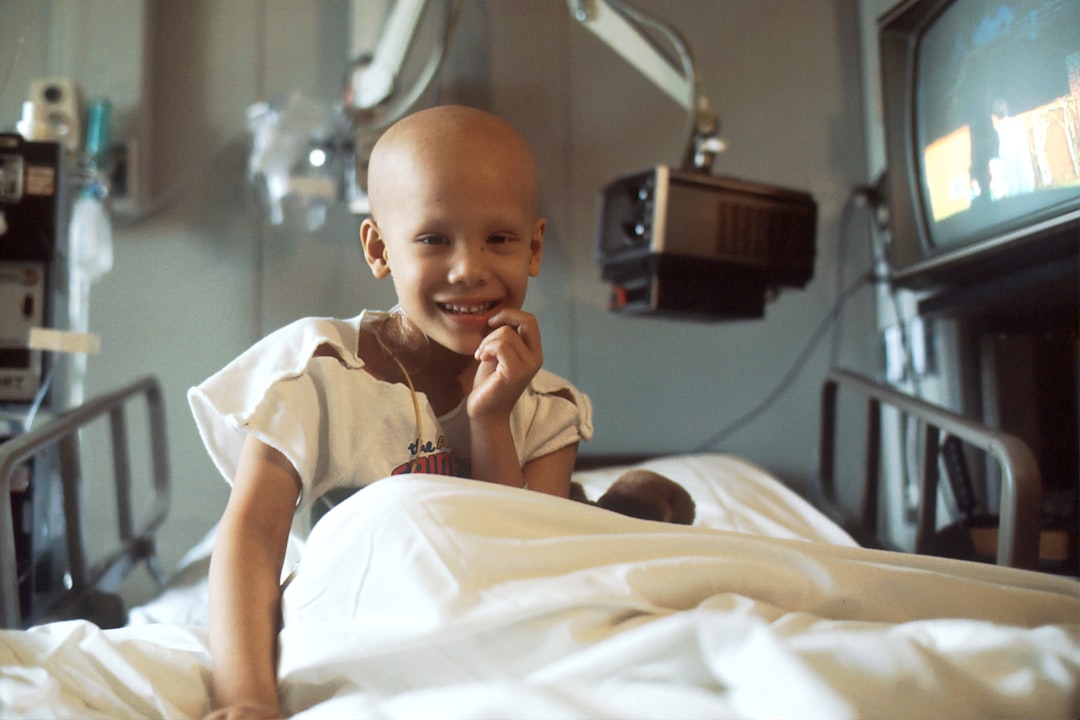
Photo by National Cancer Institute on Unsplash.
Medical Disclaimer: This article is AI-assisted and reviewed by the Vitalheros editorial team. It is provided for informational purposes only and is not a substitute for professional medical advice, diagnosis, or treatment. Always consult a qualified healthcare provider. Reviewed by The Vitalheros Editorial Team.