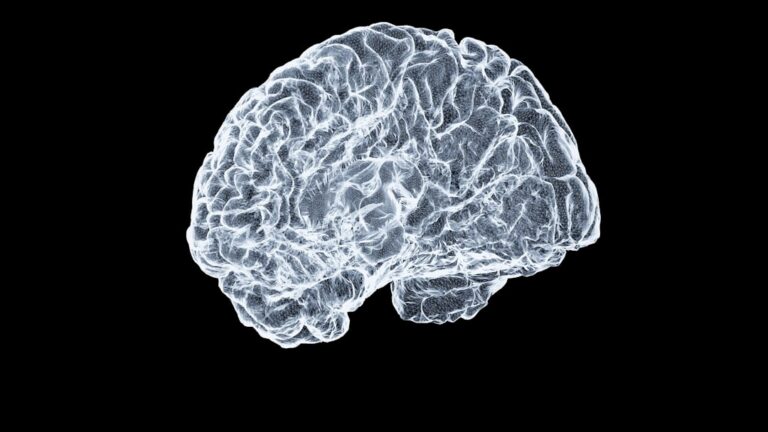
Unlocking Speech: How Ape Laughter Reveals Human Vocal Evolution

Some links in this article are affiliate links. As an Amazon Associate and partner of other programs, Vitalheros may earn a commission from qualifying purchases, at no extra cost to you. This never influences our editorial coverage.
The Echoes of Laughter: Tracing Vocal Control Back to Our Primate Cousins
Human speech, with its intricate melodies and precise articulation, stands as one of our species’ most defining characteristics. The ability to produce a vast array of controlled sounds, from whispered secrets to impassioned speeches, is something we often take for granted. Yet, the evolutionary journey that led to this sophisticated vocal control remains a subject of intense scientific inquiry. Recent research, turning its attention to the joyous sounds of great ape laughter, is shedding new light on the ancient origins of our capacity for speech.
For a long time, the focus of understanding human speech evolution centered heavily on the anatomical changes in our vocal tracts, particularly the descended larynx. While these physical adaptations are undoubtedly crucial, a growing body of evidence suggests that the story of vocal control is far more complex, potentially rooted in much older, shared primate behaviors. By meticulously observing and analyzing the laughter-like vocalizations of our closest living relatives – chimpanzees, gorillas, bonobos, and orangutans – scientists are uncovering surprising parallels that offer a compelling glimpse into the foundational elements of human speech.
A Glimpse into Primate Communication
Great apes communicate in a rich tapestry of sounds, gestures, and facial expressions. Among these, their laughter-like vocalizations are particularly intriguing. Unlike the simple, reflex-driven sounds of many animals, ape laughter appears to involve a degree of voluntary control over breath and vocalization. When a chimpanzee tickles another, or when young bonobos engage in boisterous play, the accompanying sounds are distinctly reminiscent of human giggles and chuckles, albeit with their own unique acoustic signatures.
These vocalizations are not merely instinctive outbursts; they often vary in intensity, duration, and rhythm, suggesting a level of modulation that hints at underlying neural control. Researchers have long suspected that understanding these nuanced vocal behaviors in apes could unlock secrets about the precursors to human speech, which also requires exquisite control over the respiratory system and vocal folds.
The Mechanics of Vocalization: Beyond Simple Reflexes
At its core, human speech relies on the precise coordination of numerous muscles involved in breathing and vocal fold vibration. We can control the speed, volume, and pitch of our voices, and string together discrete sounds into complex words and sentences. This level of voluntary control is a hallmark of human communication, and it’s what differentiates our speech from the more fixed, innate calls of most other animals.
The prevailing view has often been that this fine motor control over vocalization is unique to humans. However, the study of great ape laughter challenges this notion. Researchers have observed that apes can modify their laughter in response to social cues and emotional states, suggesting a flexibility that goes beyond mere reflexive gasps. This capacity for modification, even if rudimentary compared to human speech, represents a critical stepping stone in the evolutionary pathway toward full vocal mastery.
Unpacking the Research: What Ape Laughter Tells Us
The recent investigations into great ape laughter employ sophisticated acoustic analysis techniques, allowing scientists to deconstruct the vocalizations of different ape species and compare them to human laughter. This comparative approach is vital for identifying shared traits and evolutionary divergences.
Comparing Vocal Patterns
Studies typically involve recording and analyzing the ‘play vocalizations’ of various great ape species in social contexts. Scientists look for specific acoustic features, such as the duration of inhalation and exhalation, the rhythm of vocal pulses, and the overall complexity of the sound. What they often find is that while the specific sounds differ, the underlying respiratory and vocal control mechanisms show striking similarities across species.
For instance, some research highlights that great apes, much like humans, exhibit a relatively flexible respiratory pattern during laughter. This contrasts with the more rigid, one-breath-per-sound vocalizations seen in many other mammals. This flexibility in breath control is a fundamental prerequisite for human speech, allowing us to produce long strings of syllables and words on a single exhale. The presence of similar, albeit less developed, breath control in apes suggests that the neural pathways governing this ability may have a much deeper evolutionary history than previously thought.
Bridging the Gap: From Ape Giggles to Human Speech
The implications of these findings are profound. They suggest that the foundational elements of vocal control, necessary for complex human language, did not simply appear out of nowhere. Instead, they likely evolved gradually, building upon existing capacities present in our common ancestors with great apes. Ape laughter, therefore, isn’t just a charming sound; it’s a living fossil of proto-vocal control.
This research points to a scenario where the ability to modulate vocalizations and control breathing during sound production was present in our shared ancestors millions of years ago. Over time, in the human lineage, these rudimentary controls were refined, expanded, and eventually harnessed for the incredibly complex task of producing articulate speech. It provides a compelling argument against the idea of a sudden, singular leap in vocal capacity and instead emphasizes a more continuous evolutionary trajectory.
The Evolutionary Ladder: Why Vocal Control Matters
Understanding the evolution of vocal control isn’t just about tracing the origins of sound; it’s about understanding the deep cognitive and social underpinnings that make us human.
More Than Just Sound: The Cognitive Link
The ability to voluntarily control vocalizations is intimately linked to cognitive abilities such as planning, intention, and social awareness. When an ape modifies its laughter to engage with a playmate, it demonstrates a basic form of communicative intent and responsiveness. In humans, this cognitive link is amplified exponentially, allowing us to convey nuanced thoughts, emotions, and abstract ideas through speech.
This research suggests that the neural circuits responsible for vocal learning and control might have evolved from circuits initially involved in social play and emotional expression. This highlights how deeply intertwined our communication abilities are with our social and emotional lives, a connection that likely predates the emergence of full-blown language.
Rethinking the Origins of Language
This line of research offers a valuable counterpoint or complement to theories that primarily focus on the role of anatomical changes, such as the descended larynx, in the evolution of speech. While anatomical changes are undoubtedly important, they are only part of the story. The brain’s capacity to *control* the vocal apparatus is equally, if not more, critical.
By demonstrating that our great ape relatives possess a measurable degree of voluntary vocal control, scientists are building a stronger case for a gradual, rather than abrupt, evolution of speech. It suggests that the capacity for vocal learning and precise sound production might be a more ancient trait than previously assumed, refined and elaborated over millions of years into the sophisticated system we use today.
Future Directions and Broader Significance
The continued study of great ape vocalizations promises to unlock further insights into the evolutionary puzzle of human speech. Future research might explore the neural mechanisms underlying ape vocal control in greater detail, using advanced imaging techniques to map brain activity during vocal production. Such studies could reveal homologous brain regions involved in vocalization across different primate species, providing clearer evidence of shared evolutionary pathways.
Ultimately, this research helps us appreciate the extraordinary journey our ancestors embarked on, transforming simple play vocalizations into the intricate symphony of human language. It reminds us that even in the seemingly simple act of laughter, we can find profound clues to what makes us uniquely human, connecting us deeply to our primate heritage.
Explore more in our Digital Health coverage.
🔬 Scientific Takeaway
Research into great ape laughter reveals that our primate relatives possess a significant degree of voluntary vocal control, particularly in managing breath during vocalizations. This capacity is a crucial precursor to human speech, suggesting that the foundational elements for complex language evolved gradually from ancient, shared primate abilities rather than appearing suddenly. Studying these vocal patterns offers a deeper understanding of the evolutionary trajectory of human communication.
Sources & References
Photo by stefan kroeger on Unsplash.
Medical Disclaimer: This article is AI-assisted and reviewed by the Vitalheros editorial team. It is provided for informational purposes only and is not a substitute for professional medical advice, diagnosis, or treatment. Always consult a qualified healthcare provider. Reviewed by The Vitalheros Editorial Team.