Unlocking Cancer’s Resilience: Targeting Shared Vulnerabilities

Some links in this article are affiliate links. As an Amazon Associate and partner of other programs, Vitalheros may earn a commission from qualifying purchases, at no extra cost to you. This never influences our editorial coverage.
Cancer treatment has made remarkable strides, yet a persistent challenge remains: the resilience of certain cancer cells. These are the cells that evade initial therapies, adapt, and often lead to disease recurrence, turning what seemed like a victory into a prolonged battle. Breakthrough research is now focusing on these tenacious survivors, aiming to identify common weaknesses that could be exploited for more durable and effective treatments.
Understanding and targeting these shared vulnerabilities represents a strategic shift in cancer research. Rather than chasing individual mutations that can quickly evolve, scientists are exploring fundamental mechanisms that allow a diverse range of cancer cells to survive and thrive despite therapeutic onslaughts.
The Persistent Problem of Cancer Recurrence
Despite significant advancements in surgery, chemotherapy, radiation, and targeted therapies, cancer recurrence remains a formidable obstacle. Many patients experience an initial positive response to treatment, only for the disease to return months or years later. This relapse is often driven by a subset of cancer cells that possess inherent resistance or develop it over time.
Why Some Cancer Cells Survive
- Cellular Heterogeneity: Tumors are not uniform. They comprise a diverse population of cells, some of which may inherently be less susceptible to a given treatment from the outset.
- Adaptive Resistance: Cancer cells are masters of adaptation. Under the selective pressure of therapy, resistant clones can emerge and proliferate, rendering previous treatments ineffective.
- Dormancy: Some cancer cells can enter a quiescent or dormant state, effectively hiding from therapies that primarily target rapidly dividing cells. They can reawaken later, causing relapse.
- Microenvironmental Protection: The tumor microenvironment can also play a role, shielding cancer cells from drugs and supporting their survival.
These surviving cells often share common traits that enable their persistence, even if their genetic makeups differ. Identifying these shared survival pathways could unlock new therapeutic strategies.
Identifying Common Weaknesses: A New Frontier
The core of this emerging research lies in pinpointing vulnerabilities that are common across various types of surviving cancer cells, regardless of their specific genetic mutations or tumor origin. Imagine a fortress with many gates, each guarded differently. If you try to breach one gate, the enemy might simply use another. But if you can find a fundamental flaw in the fortress’s foundation, you might weaken the entire structure.
This approach moves beyond targeting specific oncogenes or growth factors, which can often be bypassed by cancer cells through alternative pathways. Instead, it seeks to identify the universal ‘Achilles’ heels’ that all resilient cancer cells depend on for their survival. These could include:
- Metabolic Reprogramming: How cancer cells alter their metabolism to fuel growth and resist stress.
- Stress Response Pathways: Mechanisms cancer cells use to cope with the damage induced by chemotherapy or radiation.
- DNA Repair Mechanisms: How they efficiently repair their DNA after therapeutic assault, allowing them to recover.
- Epigenetic Adaptations: Changes in gene expression patterns that don’t involve altering the DNA sequence itself, but can profoundly impact cell behavior and survival.
By understanding these shared survival mechanisms, researchers hope to develop therapies that are less prone to resistance and more effective in preventing long-term recurrence.
The Promise of Pan-Cancer Vulnerabilities
The concept of shared vulnerabilities holds immense promise for developing treatments with broader applicability. A therapy targeting a pan-cancer vulnerability could potentially be effective across multiple cancer types, or at least against the resistant forms of various cancers. This could lead to:
Enhanced Therapeutic Strategies
New drugs designed to disrupt these common survival pathways could be developed. These might not necessarily be standalone treatments but could be used in combination with existing therapies to boost their effectiveness and prevent resistance. For instance, pairing a conventional chemotherapy agent with a drug that targets a specific survival pathway could deliver a more decisive blow to the tumor, leaving fewer resilient cells behind.
Preventing Recurrence
By eliminating the cells most likely to cause relapse, such therapies could significantly improve long-term outcomes for patients. This could shift the paradigm from merely treating active disease to proactively preventing its return.
Overcoming Drug Resistance
For patients whose cancers have become resistant to current treatments, targeting these fundamental survival mechanisms could offer new avenues for therapy when other options have been exhausted.
“The challenge of cancer recurrence demands innovative thinking. By focusing on what makes cancer cells resilient, we open doors to therapies that could fundamentally alter the disease trajectory.”
The Road Ahead: From Discovery to Clinic
It is important to remember that identifying these vulnerabilities is often the first step in a long and complex journey toward clinical application. Extensive research is required to:
- Validate Targets: Confirm that the identified vulnerabilities are truly essential for cancer cell survival and that targeting them is safe and effective.
- Develop Specific Agents: Create new drugs or repurpose existing ones that can precisely modulate these pathways without causing unacceptable side effects in healthy tissues.
- Conduct Clinical Trials: Rigorously test these new therapies in human patients to assess their safety and efficacy.
This research represents a significant and exciting advancement in our understanding of cancer’s incredible adaptability. By systematically dismantling the survival strategies of the most resilient cancer cells, scientists are paving the way for a future where cancer recurrence is a less frequent and less formidable threat.
The journey to conquer cancer is ongoing, marked by continuous learning and innovation. This focus on shared vulnerabilities exemplifies the dedication of the scientific community to outsmarting this complex disease, offering renewed hope for patients worldwide.
Explore more in our Digital Health coverage.
🔬 Scientific Takeaway
New research is exploring shared vulnerabilities across cancer cells that survive initial treatments and lead to recurrence. By identifying common survival mechanisms, scientists aim to develop therapies that are less prone to resistance and more effective in preventing long-term relapse. This strategic shift could lead to broader, more durable cancer treatments.
Sources & References
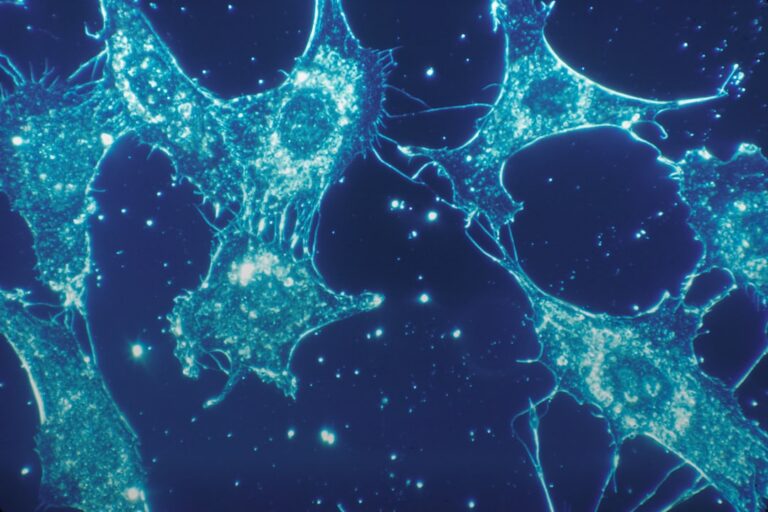
Photo by National Cancer Institute on Unsplash.
Medical Disclaimer: This article is AI-assisted and reviewed by the Vitalheros editorial team. It is provided for informational purposes only and is not a substitute for professional medical advice, diagnosis, or treatment. Always consult a qualified healthcare provider. Reviewed by The Vitalheros Editorial Team.