The Art of Simulated Wounds: Elevating Medical Training and Saving Lives
Some links in this article are affiliate links. As an Amazon Associate and partner of other programs, Vitalheros may earn a commission from qualifying purchases, at no extra cost to you. This never influences our editorial coverage.
In the high-stakes world of emergency medicine and trauma care, proficiency isn’t just a goal; it’s a lifeline. For medical professionals, particularly those operating in challenging environments like combat zones or emergency rooms, the ability to accurately assess and treat injuries under pressure is paramount. This critical skill is increasingly honed not just through textbooks and lectures, but through immersive, hyper-realistic simulations.
At the heart of these advanced training scenarios is a specialized craft known as medical moulage – the art of creating lifelike wounds and medical conditions on mannequins or live actors. This isn’t merely about visual effects; it’s about engineering a visceral, psychologically impactful experience that bridges the gap between theoretical knowledge and practical application, ultimately preparing responders to save lives when it truly counts.
The Critical Imperative for Realism in Medical Training
Imagine a medic on a battlefield, or an emergency room doctor confronting a severe trauma. Their ability to react swiftly and accurately can mean the difference between life and death. Traditional training methods, while foundational, often struggle to replicate the sheer complexity, stress, and visual fidelity of real-world medical emergencies. This is where high-fidelity simulation, powered by expert moulage, proves indispensable.
Realistic simulations offer a safe yet challenging environment for practitioners to make mistakes, learn from them, and refine their techniques without risking actual patient harm. The visual and tactile authenticity of a simulated injury — be it a deep laceration, a severe burn, or a compound fracture — engages more senses, fostering deeper learning and muscle memory that can be crucial in a crisis.
Bridging Theory and Practice with Verisimilitude
Medical education has long grappled with the challenge of translating classroom knowledge into clinical competence. While cadaver labs and clinical rotations provide invaluable experience, they often come with limitations regarding repeatability, ethical considerations, and the ability to simulate dynamic, evolving conditions.
Moulage-enhanced simulations overcome many of these hurdles. By recreating specific injury patterns, anatomical landmarks, and even physiological responses (such as bleeding or cyanosis), trainers can present trainees with a consistent, controlled, yet incredibly realistic challenge. This allows for repeated practice of critical procedures, from tourniquet application and wound packing to airway management and hemorrhage control, ensuring that skills are not just understood, but mastered.
High-Stakes Environments: Military and Emergency Services
The military, in particular, has been a significant driver in advancing medical simulation. Combat casualty care demands an extraordinary level of preparedness, where medics often operate under extreme duress, far from definitive medical facilities. Training with realistic simulated injuries, often incorporating advanced prosthetic techniques and special effects makeup, allows military personnel to practice life-saving interventions in scenarios that closely mirror the chaos and severity of actual combat injuries.
Similarly, emergency medical services (EMS) and hospital emergency departments benefit immensely. From mass casualty drills to individual patient scenarios, these simulations allow teams to practice communication, coordination, and rapid decision-making, improving overall response efficacy and patient outcomes. The psychological impact of seeing a ‘patient’ with a graphic, realistic injury helps prepare responders for the emotional demands of their profession, fostering resilience and professionalism.
The Art and Science of Medical Moulage
Creating truly convincing simulated wounds is far more than just applying makeup. It’s a specialized discipline that blends artistic talent with a deep understanding of anatomy, pathology, and material science. Moulage artists – sometimes called medical simulation specialists – employ a diverse toolkit to achieve astonishing realism.
- Anatomical Accuracy: Wounds must be placed and shaped correctly according to anatomical structures and injury mechanisms.
- Pathological Detail: Replicating the signs of infection, necrosis, bruising, and other pathological processes requires intricate knowledge.
- Material Innovation: Using silicone, latex, gels, and various pigments, artists mimic skin texture, tissue damage, and bodily fluids with remarkable precision.
- Dynamic Effects: Incorporating pumps for pulsating blood, or mechanisms for bone protrusion, adds another layer of realism and interactivity.
Beyond Cosmetics: The Impact on Learning Outcomes
The effectiveness of moulage-enhanced simulation extends beyond mere visual appeal. Research consistently suggests that high-fidelity simulations lead to better learning outcomes, improved retention of skills, and increased confidence among trainees. When a scenario feels real, trainees are more engaged, their cognitive processes are more active, and their emotional responses are closer to what they might experience in an actual emergency.
“The power of realistic simulation lies in its ability to suspend disbelief, allowing trainees to fully immerse themselves in the scenario and react as they would in a real-life situation. This deep engagement is crucial for developing robust clinical reasoning and psychomotor skills.”
The tactile feedback, the visual cues, and the perceived urgency all contribute to a learning environment that is significantly more effective than purely theoretical instruction. This hands-on, experiential learning is particularly vital for developing the procedural skills and critical thinking necessary for complex medical interventions.
Innovating for Future Healthcare
The field of medical moulage and simulation is continuously evolving. Advances in materials science, 3D printing, and digital technologies are enabling even more sophisticated and customizable training tools. From creating patient-specific injury models to developing interactive, augmented reality simulations, the possibilities are expanding rapidly.
Expanding Applications: Beyond Trauma
While trauma care is a primary application, medical moulage is also being used to simulate a wide range of other conditions, including dermatological diseases, surgical complications, and chronic illnesses. This allows healthcare providers across various specialties to practice diagnostic skills, patient communication, and treatment protocols in a controlled environment.
The ability to accurately represent diverse patient populations and conditions helps foster cultural competence and improves the preparedness of medical professionals to serve a broad spectrum of individuals.
The Human Element in Technology
Ultimately, while technology plays an increasing role, the human artistry and expertise behind medical moulage remain indispensable. It is the skilled hands and keen eyes of specialists who translate medical knowledge into tangible, impactful learning tools. Their dedication to realism ensures that the next generation of medics, nurses, and doctors are not just knowledgeable, but truly prepared to face the unpredictable challenges of healthcare and, most importantly, to save lives.
In a world where medical emergencies can strike at any moment, the art of fake wounds is proving to be a genuine force for good, fortifying the skills of our healthcare heroes and strengthening the fabric of public safety.
Explore more in our Digital Health coverage.
🔬 Scientific Takeaway
Hyper-realistic medical simulations, enhanced by detailed moulage, significantly improve the training of healthcare professionals, particularly in high-stakes environments like military and emergency medicine. By providing authentic visual and tactile experiences, these simulations foster deeper learning, enhance skill retention, and build confidence, ultimately leading to better patient outcomes and increased preparedness for critical medical situations.
Sources & References
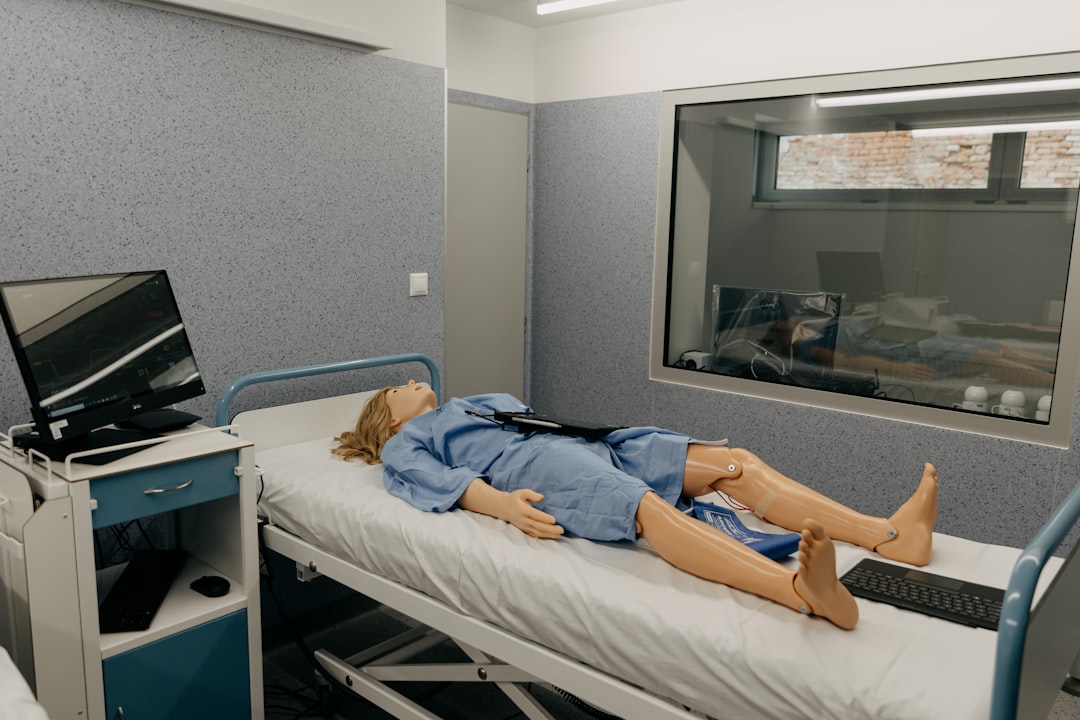
Photo by Trnava University on Unsplash.
Medical Disclaimer: This article is AI-assisted and reviewed by the Vitalheros editorial team. It is provided for informational purposes only and is not a substitute for professional medical advice, diagnosis, or treatment. Always consult a qualified healthcare provider. Reviewed by The Vitalheros Editorial Team.