APOE2 Allele Boosts Neuronal Resilience, Shedding Light on Longevity
Some links in this article are affiliate links. As an Amazon Associate and partner of other programs, Vitalheros may earn a commission from qualifying purchases, at no extra cost to you. This never influences our editorial coverage.
The quest to understand human longevity and the origins of age-related diseases often leads scientists to the intricate world of genetics. Among the genes that have consistently captured attention is Apolipoprotein E (APOE). Known for its significant role in lipid metabolism and its strong association with both lifespan and Alzheimer’s disease risk, APOE has long been a subject of intense research. Now, new cell culture findings are adding another layer to our understanding, suggesting that the ‘desirable’ APOE2 variant may directly make neurons more resilient to the ravages of time and stress.
This recent work, published in an open-access paper, delves into the cellular mechanisms by which different APOE genotypes influence neuronal aging and vulnerability. While the precise interplay remains complex, the observations offer compelling evidence that APOE2 actively promotes DNA repair pathways and reduces cellular senescence in human neurons, painting a clearer picture of its protective qualities.
The APOE Gene: A Master Regulator of Brain Health
APOE is a critical plasma glycoprotein, fundamental for transporting lipids, particularly cholesterol, throughout the body and within the central nervous system (CNS). In the brain, APOE acts as the primary cholesterol carrier between astrocytes (support cells) and neurons, a process vital for energy supply, synaptic remodeling (the constant adjustment of connections between neurons), and neuronal repair. Given the brain’s unique lipid transport system, distinct from the rest of the body, APOE’s role on both sides of the blood-brain barrier is particularly crucial.
Humans typically carry one of three common variants of the APOE gene: APOE2, APOE3, and APOE4. Each variant is defined by subtle differences in its genetic sequence, yet these variations have profound implications for health and longevity:
- APOE3: The most common variant, generally considered neutral in terms of disease risk.
- APOE2: Associated with modestly greater longevity and a reduced risk of Alzheimer’s disease. It’s often referred to as the ‘protective’ allele.
- APOE4: Linked to a significantly increased risk of developing late-onset Alzheimer’s disease and, in some studies, a slightly shorter lifespan.
For years, investigations into how APOE variants affect Alzheimer’s risk have largely centered on their impact on lipid metabolism. However, it’s increasingly clear that APOE’s functions might extend beyond just lipid transport, potentially influencing intracellular processes and inflammatory responses.
Unpacking Neuronal Resilience: New Insights from APOE2
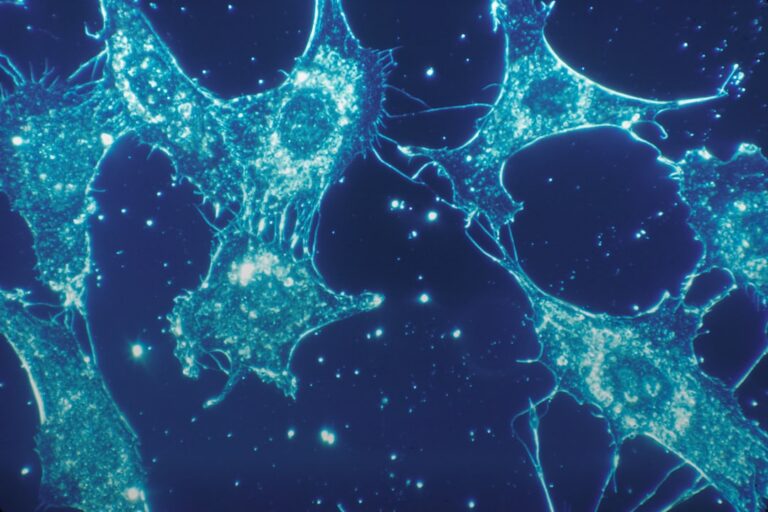
The recent study sought to evaluate how APOE genotype contributes to neuronal aging and vulnerability. Researchers utilized induced pluripotent stem cell (iPSC)-derived human neurons, including GABAergic and glutamatergic types, allowing them to observe genotype-dependent differences at a cellular level.
APOE2: Fortifying Neurons Against Damage
The findings for the APOE2 variant were particularly striking. Neurons carrying the APOE2 allele demonstrated enhanced resilience:
- Reduced DNA Damage: APOE2 GABAergic neurons showed an upregulation of DNA repair signaling pathways, suggesting a more robust ability to mend genetic damage.
- Resistance to Stress: In models designed to induce genotoxic stress (damage to DNA), APOE2 neurons proved more resistant and less prone to acquiring a senescent-like phenotype compared to APOE3 and APOE4 neurons. Cellular senescence is a state where cells stop dividing but remain metabolically active, often secreting inflammatory molecules, contributing to aging and disease.
- Markers of Stability: Consistent with these observations, APOE2 neurons displayed smaller nucleoli and preserved nuclear lamina integrity. Both features are molecular hallmarks associated with longevity and genomic stability, indicating a well-maintained cellular infrastructure.
APOE4: A Pathway Towards Vulnerability
In stark contrast, neurons with the APOE4 variant exhibited markers indicative of increased vulnerability and accelerated aging:
- Increased DNA Damage: APOE4 neurons showed elevated levels of DNA damage, aligning with their higher susceptibility to stress.
- Altered Cellular Dynamics: These neurons displayed altered cell motility and increased synaptic gene expression, though the full implications of these changes are still being explored.
- Accelerated Senescence Markers: APOE4 neurons presented with enlarged nucleoli and increased expression of senescence-associated markers, suggesting a predisposition towards a senescent state.
- Ribosomal RNA Dysregulation: Even under non-stress conditions, APOE4 GABAergic neurons showed increased ribosomal RNA expression, pointing to potential dysregulation in ribosome biogenesis and protein translation, which can contribute to intracellular energy depletion and cellular stress.
Beyond Lipid Transport: A Broader Role for APOE?
These findings suggest that the APOE genotype influences neuronal aging trajectories not solely through its well-known role in lipid transport, but also through differential regulation of DNA damage responses and nuclear homeostasis. The observation that APOE2 neurons maintain genomic stability and resist senescence, while APOE4 neurons show signs of accelerated cellular aging, opens new avenues for understanding neurodegeneration.
The study also found that these anti-aging molecular features observed in APOE2 neurons were recapitulated in the hippocampus of aged APOE2 knock-in mice, lending significant in vivo support to the cell culture findings. This suggests that the cellular mechanisms identified in lab dishes likely have real-world relevance in a living organism.
While the exact mechanistic interpretation of how APOE variants directly influence DNA damage and senescence remains to be fully elucidated, this research underscores that APOE’s influence is far-reaching. It likely has critical roles inside the cell, impacting fundamental processes related to genomic integrity and cellular resilience.
The Road Ahead: Understanding APOE for Longevity
This research represents a significant step forward in geroscience, providing concrete cellular-level insights into why APOE2 confers protection and APOE4 increases risk. By demonstrating that APOE genotype shapes neuronal aging through genomic stability, scientists gain a deeper understanding of the molecular underpinnings of healthy brain aging and neurodegenerative diseases.
However, it’s important to remember that this is foundational research. The complexity of APOE’s functions, including its potential links to inflammation and its diverse roles within and outside cells, means that much more work is needed. Future studies will aim to unravel the precise molecular pathways connecting APOE variants to DNA repair, nucleolar activity, and cellular senescence, with the ultimate goal of identifying potential targets for interventions that could promote neuronal resilience and extend healthy brain longevity.
Explore more in our Longevity & Biohacking coverage.
🔬 Scientific Takeaway
New research shows the APOE2 gene variant enhances neuronal resilience by upregulating DNA repair, resisting genotoxic stress, and reducing cellular senescence in human neurons. In contrast, APOE4 neurons exhibit increased DNA damage and senescence markers. This suggests APOE genotype influences neuronal aging through differential regulation of genomic stability and nuclear homeostasis, independent of its well-known lipid transport functions.
Sources & References
Photo by Shawn Day on Unsplash.
Medical Disclaimer: This article is AI-assisted and reviewed by the Vitalheros editorial team. It is provided for informational purposes only and is not a substitute for professional medical advice, diagnosis, or treatment. Always consult a qualified healthcare provider. Reviewed by The Vitalheros Editorial Team.