Cellular Senescence and Cancer: Unraveling the Vascular Connection
Some links in this article are affiliate links. As an Amazon Associate and partner of other programs, Vitalheros may earn a commission from qualifying purchases, at no extra cost to you. This never influences our editorial coverage.
As we age, our bodies undergo a myriad of changes, some visible, others hidden deep within our cellular machinery. Among these microscopic shifts, the accumulation of senescent cells stands out as a critical factor influencing health and disease. These ‘zombie cells,’ as they are often called, cease to divide but refuse to die, lingering in tissues and emitting a potent cocktail of inflammatory signals. Emerging research is shedding light on how these seemingly inert cells actively contribute to the development and progression of cancer, particularly by orchestrating the growth of new, often unhealthy, blood vessels – a process known as angiogenesis.
Understanding this intricate interplay between cellular aging, chronic inflammation, and vascular remodeling offers profound insights into cancer’s origins and opens new avenues for therapeutic intervention. This article delves into how senescent cells create a microenvironment that not only tolerates but actively fosters tumor growth, with a particular focus on the context of inflammatory bowel disease (IBD) and its link to intestinal cancers.
The Enigma of Cellular Senescence: Friend or Foe?
Cellular senescence is a state of irreversible cell cycle arrest. A cell enters senescence when it detects damage or stress, such as DNA damage, oxidative stress, or shortened telomeres. This mechanism is thought to be a protective measure, preventing potentially damaged or pre-cancerous cells from replicating. For instance, acute senescence can play a role in wound healing and early tumor suppression.
However, as we age, the body’s ability to clear these senescent cells diminishes, leading to their accumulation in various tissues and organs. When these cells persist, their protective role flips, becoming detrimental. They contribute to tissue dysfunction, chronic inflammation, and create an environment ripe for age-related diseases, including neurodegeneration, cardiovascular disease, and cancer.
The Senescence-Associated Secretory Phenotype (SASP)
What makes senescent cells particularly problematic is not just their presence, but their activity. Far from being inert, senescent cells develop a unique secretome known as the Senescence-Associated Secretory Phenotype (SASP). This complex mixture includes a wide array of bioactive molecules:
- Pro-inflammatory cytokines: Such as Interleukin-6 (IL-6) and Interleukin-8 (IL-8), which fuel chronic inflammation.
- Chemokines: Molecules that attract immune cells, sometimes leading to an ineffective or exhausted immune response.
- Growth factors: That can stimulate the proliferation of neighboring cells, or, paradoxically, contribute to tumor growth.
- Matrix metalloproteinases (MMPs): Enzymes that remodel the extracellular matrix, altering tissue structure and function.
The SASP essentially acts as a localized inflammatory factory, constantly signaling to its surroundings. This persistent inflammation not only damages healthy tissue but also creates a permissive environment for abnormal cell growth and immune evasion. In conditions like inflammatory bowel disease (IBD), chronic stress and inflammation can induce stress-induced premature senescence (SIPS) in intestinal cells, further amplifying SASP production and its downstream effects.
Pathological Angiogenesis: Building Cancer’s Home
Angiogenesis, the formation of new blood vessels from pre-existing ones, is a fundamental biological process vital for development, wound healing, and reproduction. However, in the context of disease, uncontrolled and aberrant angiogenesis is a hallmark of cancer. Tumors require a constant supply of oxygen and nutrients to grow beyond a microscopic size, and they achieve this by hijacking the body’s angiogenic machinery, essentially building their own supply lines.
While many factors contribute to tumor angiogenesis, research highlights SASP’s direct and significant role in driving this pathological process. The chronic inflammatory signals emitted by senescent cells provide a continuous stimulus for new vessel formation, creating a vascular network that supports and sustains tumor growth.
How SASP Fuels Vessel Growth
The SASP’s influence on angiogenesis is not a simple, single-factor event. Instead, it involves a complex cascade of signaling pathways. Key inflammatory mediators within the SASP, such as NF-κB, are pivotal. NF-κB activation, in turn, drives the production of potent pro-angiogenic cytokines like IL-6 and IL-8. These cytokines then activate further pathways, such as the JAK/STAT3 signaling cascade, which upregulates the expression of other pro-angiogenic factors like MMP-9 and vascular endothelial growth factor (VEGF).
This broad and redundant collection of factors, fueled by chronic inflammation and tissue injury, means that SASP-driven angiogenesis can be particularly resilient. Traditional anti-VEGF therapies, while effective in some cancers, may face limitations in contexts where SASP orchestrates a wider array of pro-angiogenic signals.
Dysfunctional Vessels, Immune Evasion
Crucially, the blood vessels formed under the influence of SASP are not normal, healthy vessels. They are often structurally unstable, leaky, and disorganized, with poorly maintained endothelial junctions. This dysfunctional vasculature contributes to an unfavorable tissue microenvironment in several ways:
- Impaired nutrient delivery: Despite their abundance, these vessels often deliver oxygen and nutrients inefficiently, leading to hypoxic regions within tumors that can promote aggressive cancer phenotypes.
- Immune suppression: The abnormal structure of these vessels impedes the normal trafficking of immune cells, preventing anti-tumor immune cells from effectively infiltrating the tumor microenvironment. Furthermore, the dysfunctional endothelium itself can produce immunosuppressive factors, creating a protective shield for cancer cells.
- Metastasis promotion: The leakiness of these vessels can also provide easy escape routes for cancer cells, facilitating metastasis to distant sites.
In essence, SASP-induced angiogenesis doesn’t just provide fuel for cancer; it actively constructs an environment that helps tumors evade immune surveillance and thrive.
Inflammatory Bowel Disease: A Prime Example
The connection between chronic inflammation and cancer is particularly stark in inflammatory bowel disease (IBD), which significantly increases the risk of developing intestinal cancers like colitis-associated cancer (CAC). While sporadic colorectal cancer (CRC) often follows an adenoma-carcinoma sequence, CAC typically progresses from inflammation to dysplasia to cancer, highlighting the profound impact of persistent inflammatory stress.
In IBD, the chronic mucosal inflammation drives stress-induced premature senescence in intestinal cells, leading to a sustained SASP. This constant inflammatory signaling, coupled with the resulting pathological angiogenesis, creates a distinctly pro-tumorigenic microenvironment. Reviewers emphasize that pathological angiogenesis is not merely a side effect of IBD but a core reason why chronic inflammation contributes to the development of cancers such as CAC.
Strategies for Intervention: Targeting Senescence and Angiogenesis
The growing understanding of how senescent cells and their SASP drive pathological angiogenesis offers exciting new avenues for therapeutic intervention. Strategies aimed at disrupting this pro-cancerous environment include:
- Senolytics: These are drugs designed to selectively eliminate senescent cells, thereby reducing the overall burden of SASP in tissues.
- Senomorphics: Rather than killing senescent cells, senomorphics aim to modulate or suppress the harmful SASP, neutralizing its inflammatory and pro-angiogenic effects.
- Anti-angiogenic therapies: While existing anti-VEGF treatments have had mixed success, combining them with senolytic or senomorphic approaches could be more effective, particularly in cancers driven by the broader SASP-mediated angiogenesis.
The goal is to move towards precision interventions that can specifically target the mechanisms by which chronic inflammation and cellular senescence remodel the tissue microenvironment to favor cancer. By disarming the ‘zombie cells’ and dismantling the unhealthy vascular networks they help construct, we may be able to prevent inflammation-associated cancers and improve long-term outcomes for individuals at risk, such as those with IBD.
The intricate dance between aging cells, inflammation, and blood vessel formation underscores the complexity of cancer development. As research continues to unravel these connections, the promise of therapies that target the fundamental processes of aging to combat diseases like cancer becomes increasingly tangible.
Explore more in our Longevity & Biohacking coverage.
🔬 Scientific Takeaway
Senescent cells, through their inflammatory secretions (SASP), actively drive pathological angiogenesis, creating dysfunctional blood vessels that nourish tumors and suppress immune responses. This process establishes a pro-cancer microenvironment, particularly evident in chronic inflammatory conditions like IBD, and represents a crucial link between aging, inflammation, and cancer development. Targeting senescent cells or their SASP could offer novel strategies to disrupt tumor growth and improve patient outcomes.
Sources & References
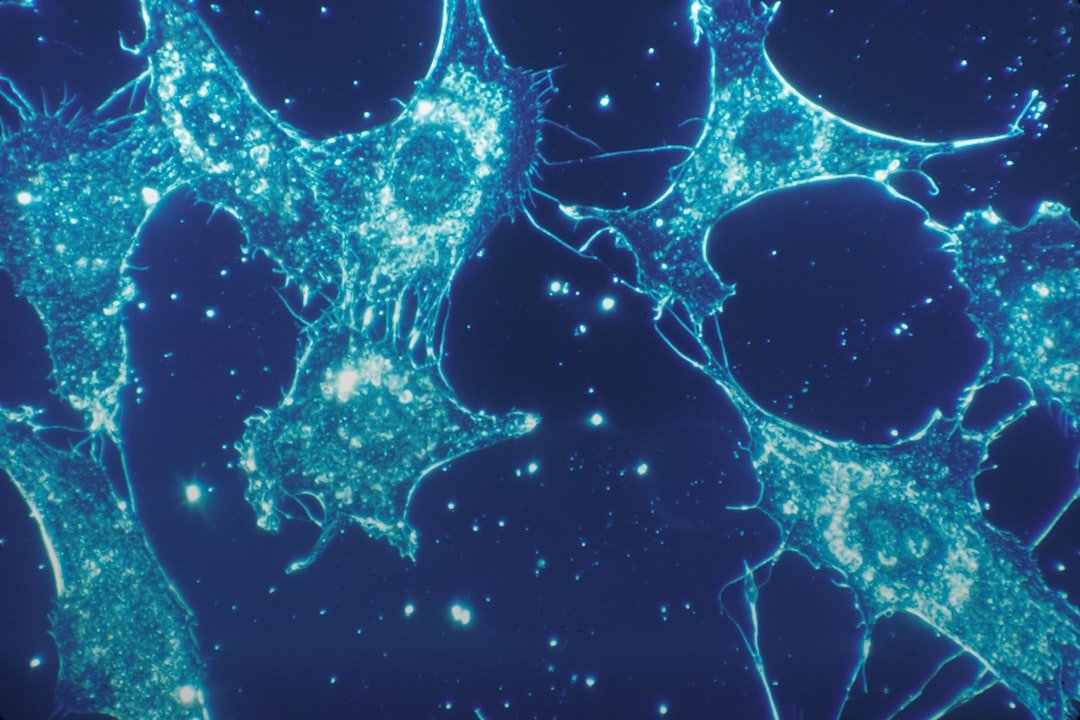
Photo by National Cancer Institute on Unsplash.
Medical Disclaimer: This article is AI-assisted and reviewed by the Vitalheros editorial team. It is provided for informational purposes only and is not a substitute for professional medical advice, diagnosis, or treatment. Always consult a qualified healthcare provider. Reviewed by The Vitalheros Editorial Team.