
Mitochondrial Dysfunction: A Hidden Driver of Chronic Aging Inflammation
Some links in this article are affiliate links. As an Amazon Associate and partner of other programs, Vitalheros may earn a commission from qualifying purchases, at no extra cost to you. This never influences our editorial coverage.
The Mitochondria-Inflammation Axis: A Core Driver of Aging
Deep within every cell of our bodies, tiny organelles known as mitochondria tirelessly work as the primary power generators, converting nutrients into adenosine triphosphate (ATP) – the fundamental energy currency that fuels virtually all cellular operations. However, as we age, the efficiency and health of these cellular powerhouses often decline. This age-related mitochondrial dysfunction does more than just reduce our energy supply; it plays a profound and increasingly recognized role in driving chronic inflammation, a pervasive condition often termed ‘inflammaging,’ which contributes significantly to age-related diseases and the overall aging process.
Recent research highlights mitochondria not merely as energy factories, but as master regulators influencing a broad spectrum of cellular processes, including bioenergetics, redox balance, stem cell fate, and even innate immune signaling. Understanding this intricate connection is crucial for developing effective strategies to promote healthy longevity.
Mitochondria: More Than Just Power Plants
While their role in ATP production is fundamental, mitochondria are far more versatile. They are central to cellular communication, determining how a cell responds to stress, maintains its genetic integrity, and even orchestrates its own demise when necessary. This expansive influence positions them at the heart of many age-related changes.
When Mitochondria Malfunction: The Roots of Chronic Inflammation
The realization that dysfunctional mitochondria actively contribute to chronic inflammation has been a significant advance in aging research. When mitochondria become damaged or stressed, they can inadvertently trigger immune responses within the cell, leading to a state of low-grade, persistent inflammation. This occurs through several mechanisms:
- Mitochondrial DNA (mtDNA) Mutations: Unlike nuclear DNA, mtDNA is more susceptible to damage and mutations. As these mutations accumulate with age, they can impair mitochondrial function.
- Reactive Oxygen Species (ROS) Production: Damaged mitochondria can become inefficient, producing excessive amounts of ROS, which are harmful byproducts that cause oxidative stress and cellular damage.
- Release of Danger Signals (mtDAMPs): When mitochondria are compromised, they can release components normally confined within them, such as mtDNA or specific mitochondrial proteins, into the cytoplasm. These ‘mitochondrial damage-associated molecular patterns’ (mtDAMPs) are recognized by the cell as foreign or dangerous.
These mtDAMPs can activate powerful innate immune pathways, such as the cGAS-STING and NF-κB pathways. This activation then reinforces a cycle of senescence-linked cytokine circuits, ultimately contributing to the chronic inflammatory tone characteristic of aging.
Key Mechanisms of Mitochondrial Decline in Aging
The age-associated decline in mitochondrial health is not a single event but a complex interplay of various factors.
The Role of Mitochondrial DNA (mtDNA)
Mitochondrial DNA is particularly vulnerable to damage, and age-related mutations can accumulate over time. These mutations, combined with a phenomenon called ‘clonal mosaicism’ (where cells can accumulate different populations of mtDNA), can significantly impair the mitochondria’s ability to respire efficiently and produce energy. This not only affects the cell’s energy supply but also reshapes the availability of key metabolites, which in turn can reprogram long-lived epigenetic states. These epigenetic changes are critical because they govern vital cellular functions like quiescence (a dormant state important for stem cells), lineage commitment (what type of cell a stem cell becomes), and overall regenerative capacity. A decline in these functions contributes to tissue and organ aging.
Erosion of Quality Control
Our cells possess sophisticated ‘mitochondrial quality control’ (MQC) mechanisms designed to maintain mitochondrial health. These include:
- Fission-Fusion Balance: Mitochondria constantly divide (fission) and merge (fusion) to maintain a healthy network, allowing for the isolation and removal of damaged parts or the sharing of resources.
- Mitophagy: This is a specialized form of autophagy, the cellular ‘self-eating’ process, specifically targeting and removing damaged or dysfunctional mitochondria.
- Mitochondrial Unfolded Protein Response (UPRmt): A stress response pathway that helps maintain the proper folding of mitochondrial proteins.
With age, the efficiency of these MQC pathways often declines. This erosion permits the persistence of damaged, ROS-producing organelles and reduces the containment of mitochondrial danger signals, further exacerbating cellular stress and inflammation.
NAD+ Depletion: A Metabolic Bottleneck
Another crucial factor in age-related mitochondrial dysfunction is the depletion of nicotinamide adenine dinucleotide (NAD+). NAD+ is a vital coenzyme involved in hundreds of metabolic reactions, including those essential for mitochondrial function and DNA repair. It also serves as a critical substrate for sirtuins, a family of proteins known for their roles in regulating cellular health, metabolism, and longevity pathways.
As we age, NAD+ levels tend to fall, creating a metabolic bottleneck. This compromise in sirtuin-dependent resilience can enforce a state known as Mitochondrial Dysfunction-Associated Senescence (MiDAS). MiDAS links redox collapse (an imbalance in cellular reduction-oxidation reactions) directly to altered senescence phenotypes and a decline in regenerative capacity, further cementing the role of NAD+ in healthy aging.
Targeting Mitochondria for Longevity: Emerging Strategies
The profound understanding of mitochondria’s role in aging has paved the way for exciting therapeutic strategies aimed at enhancing mitochondrial health and extending healthspan. These emerging interventions are at various stages of research and development:
NAD+ Repletion
Strategies to boost cellular NAD+ levels, often through the use of NAD+ precursors, are being investigated. The goal is to restore metabolic balance, enhance sirtuin activity, and improve mitochondrial function, potentially mitigating the effects of NAD+ depletion.
Enhancing Mitophagy
Drugs or compounds that can specifically enhance mitophagy — the cellular process of removing damaged mitochondria — are under investigation. By clearing out unhealthy mitochondria, cells can maintain a more robust and efficient mitochondrial population.
Mitochondrial Transplantation and Engineering
More advanced and experimental approaches involve the transplantation of healthy mitochondria into compromised cells or tissues, or even engineering mitochondria to improve their function. These strategies aim to directly replace or repair dysfunctional mitochondrial populations.
Precision Gene Editing for mtDNA
Cutting-edge technologies like mitochondria-targeted transcription activator-like effector nucleases (mitoTALENs) or zinc-finger nucleases (mitoZFNs) are being explored to precisely eliminate mutant mitochondrial DNA. This offers the potential to ‘clean up’ and restore healthy mtDNA populations within cells, thereby improving mitochondrial function.
It is important to note that the effectiveness of these rejuvenation strategies may depend on tissue-specific thresholds and the particular context of their application, highlighting the complexity and personalized nature of future longevity interventions.
The Path Forward: A Holistic View of Mitochondrial Health
The intricate relationship between mitochondrial dysfunction and chronic inflammation underscores a fundamental aspect of the aging process. As research continues to unravel these complex cellular mechanisms, the promise of interventions that target mitochondrial health grows. Moving forward, a holistic understanding of mitochondrial biology and its interplay with the immune system will be key to unlocking new avenues for extending not just lifespan, but more importantly, healthspan.
Explore more in our Longevity & Biohacking coverage.
🔬 Scientific Takeaway
Mitochondrial dysfunction is a significant driver of chronic inflammation (inflammaging) and stem cell exhaustion, key hallmarks of aging. This occurs through accumulated mtDNA mutations, impaired quality control, and the release of mitochondrial damage signals that activate immune pathways. Emerging interventions target NAD+ repletion, mitophagy enhancement, and precision mtDNA editing to restore mitochondrial health and potentially extend healthspan.
Sources & References
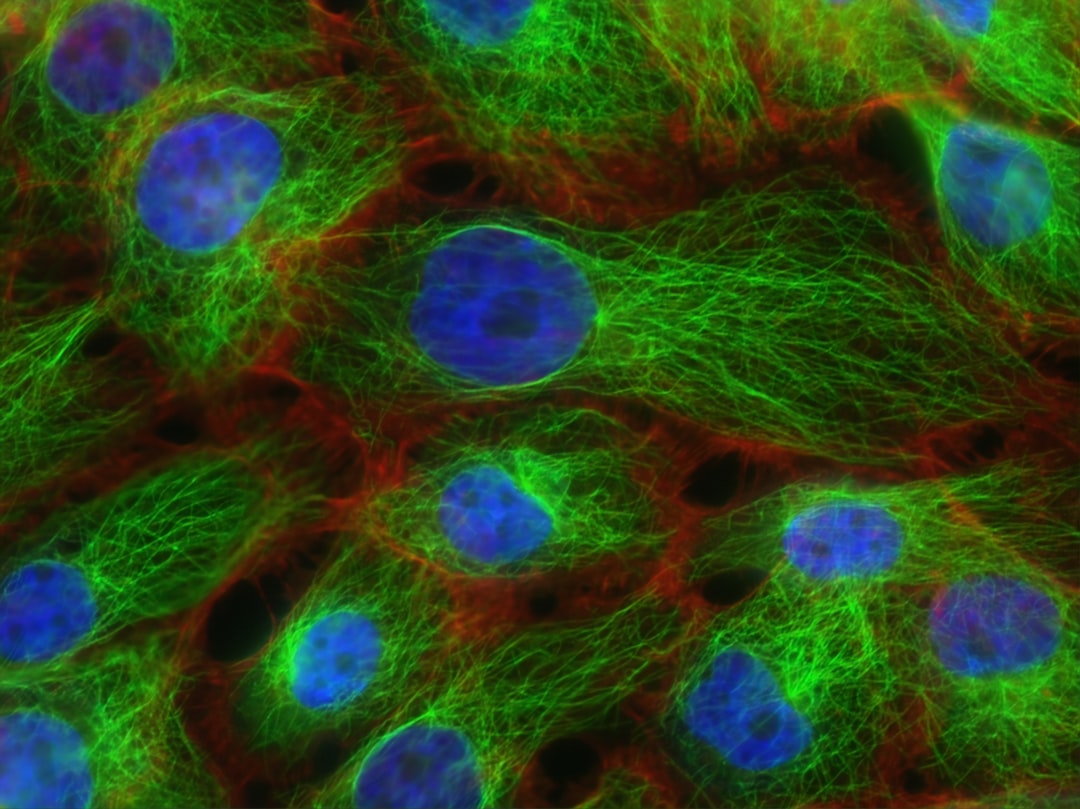
Photo by National Cancer Institute on Unsplash.
Medical Disclaimer: This article is AI-assisted and reviewed by the Vitalheros editorial team. It is provided for informational purposes only and is not a substitute for professional medical advice, diagnosis, or treatment. Always consult a qualified healthcare provider. Reviewed by The Vitalheros Editorial Team.