Naked Mole-Rats: How a Stable, Low Metabolism Fuels Extreme Longevity
Some links in this article are affiliate links. As an Amazon Associate and partner of other programs, Vitalheros may earn a commission from qualifying purchases, at no extra cost to you. This never influences our editorial coverage.
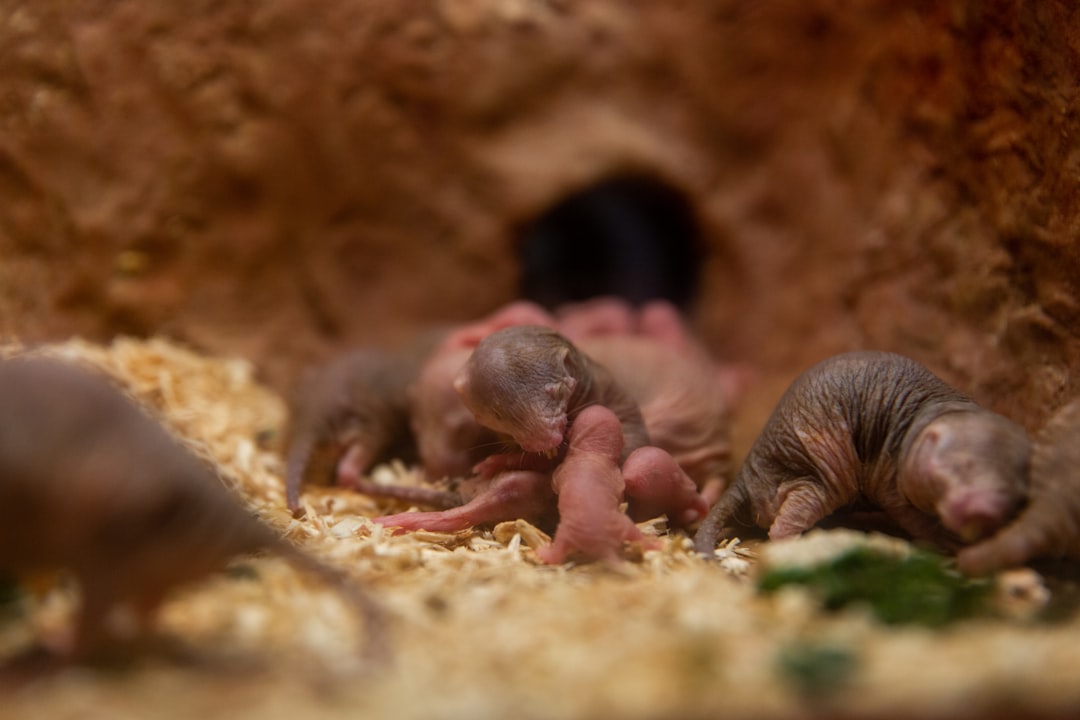
In the quest to understand and extend healthy human lifespan, scientists often turn to nature’s anomalies. Among the most fascinating of these creatures is the naked mole-rat (Heterocephalus glaber) – a subterranean rodent that defies many of the rules of aging observed in other mammals. These remarkable animals boast an exceptionally long lifespan for their size, living up to 30 years or more, and exhibit what scientists call “negligible senescence,” meaning they show few signs of age-related decline even in their later years. A recent study delves into a critical aspect of their unique biology: their resting metabolic rate (RMR).
Metabolism, the sum of chemical processes that occur within a living organism to maintain life, is intimately linked to aging. This latest research provides a detailed analysis of the naked mole-rat’s RMR, considering individual, social, and colony-level factors. The findings underscore not only their uniquely low metabolic profile but also its remarkable stability across their long lives, offering crucial insights into the mechanisms underpinning extreme longevity.
The Enigma of Naked Mole-Rat Longevity
Naked mole-rats are biological marvels. While a mouse, similar in size, might live for a mere two to three years, a naked mole-rat can thrive for decades. Beyond their extended lifespan, they resist many age-related diseases common in other mammals, including cancer, cardiovascular disease, and neurodegeneration. This makes them a prime model organism for geroscience – the study of the biological mechanisms of aging. Understanding how they sidestep the typical aging process could unlock strategies for promoting healthier, longer lives in humans.
Metabolism: A Key Player in the Longevity Equation
For decades, scientists have observed a fascinating, albeit complex, relationship between metabolic rate and lifespan across different species. Generally, larger mammals tend to live longer and exhibit lower resting metabolic rates per unit of body mass. The prevailing theory suggests that a higher metabolic rate generates more reactive oxygen species, often referred to as “oxidative damage,” which can harm cells and tissues, thereby accelerating aging. This concept is sometimes linked to the “membrane pacemaker hypothesis,” which posits that the resilience of cell membrane lipids to oxidative damage plays a significant role in determining species lifespan.
However, nature is full of exceptions. Naked mole-rats, along with certain bat species, are intriguing outliers. They are relatively small mammals yet possess extraordinary lifespans, prompting researchers to investigate how their metabolic engines operate.
Unpacking the Naked Mole-Rat’s Metabolic Profile
The recent study offered a comprehensive look at the naked mole-rat’s RMR, which is the amount of energy expended by an animal at rest in a thermally neutral environment. The researchers meticulously measured RMR across a diverse population of naked mole-rats, accounting for variables like body mass, age, and social status within their eusocial colonies.
A consistent finding was that body mass remained the primary predictor of RMR, a principle known as allometric scaling that holds true across the mammalian kingdom. This means larger individuals generally have higher absolute metabolic rates, even if their rate per unit of mass is lower.
However, the absolute RMR values recorded in naked mole-rats were strikingly lower than what would be predicted for mammals of comparable size. While previous studies and predictive models estimated RMRs for similar-sized mammals to range from approximately 51.6 ml O2/hr to 71.1 ml O2/hr, the naked mole-rats in this study exhibited an average RMR of just 45.5 ml O2/hr. This significant “metabolic depression” positions them as having an unusually low metabolic profile, a distinct characteristic that sets them apart from most other small mammals.
A Stable Engine: Metabolism Unaffected by Age
Perhaps one of the most compelling findings of the research was the stability of the naked mole-rat’s RMR throughout its life. In many mammalian species, aging is associated with measurable shifts in metabolic maintenance, often involving a decline in metabolic efficiency or changes in basal energy expenditure. Yet, in naked mole-rats, once body mass was accounted for, age did not significantly predict RMR. This means their resting metabolism appears remarkably stable across all age classes, from young adults to very old individuals.
This metabolic consistency aligns perfectly with their negligible senescence phenotype. It suggests that, at the level of resting metabolism, aging does not impose detectable energetic costs or lead to a decline in metabolic function, a stark contrast to what is observed in most other aging mammals. This stability hints at a robust internal system that maintains energetic equilibrium over decades.
The Subterranean Link: Why Low Metabolism Makes Sense
The naked mole-rat’s unique metabolic adaptations are not accidental; they are deeply intertwined with their evolutionary history and their extreme subterranean lifestyle. Living in extensive underground burrow systems in arid regions of East Africa, these animals face specific environmental pressures:
- Stable Temperatures: Underground burrows maintain relatively stable temperatures, reducing the energetic demands of thermoregulation. Unlike surface-dwelling animals that must constantly adjust to fluctuating temperatures, naked mole-rats can conserve energy by living in a more consistent thermal environment.
- Energetic Efficiency for Excavation: Digging complex tunnel networks is highly energy and water-intensive. A lower baseline metabolic rate means less energy is required for basic maintenance, freeing up resources for essential activities like excavation and foraging.
- Constrained Resources: Food and water availability can be unpredictable underground. An efficient metabolism that requires less energy to sustain itself is a clear advantage in an environment where resources may be scarce.
Within this ecological framework, reducing maintenance energy expenditure likely contributes to both the stability of their eusocial colonies and, crucially, to the species’ exceptional longevity. By operating on a lower, more efficient metabolic setting, naked mole-rats may inherently reduce the burden of oxidative stress, contributing to their remarkable resilience against aging.
Implications for Human Longevity Research
While humans are far removed from naked mole-rats on the evolutionary tree, studying these unique creatures offers invaluable insights into the fundamental processes of aging. The findings from this research suggest that a sustained low and stable metabolic rate could be a significant factor in resisting age-related decline. For longevity research, this highlights the importance of understanding:
- How metabolic pathways can be optimized for efficiency and reduced cellular stress.
- Mechanisms that maintain metabolic stability throughout life, potentially preventing age-related metabolic dysregulation.
- The interplay between environmental adaptations and intrinsic biological mechanisms that promote healthy aging.
Further research into the specific genetic and molecular underpinnings of the naked mole-rat’s metabolism could uncover novel targets for interventions aimed at extending human healthspan.
The naked mole-rat continues to be a living laboratory for aging research, demonstrating that extreme longevity and negligible senescence are indeed possible in a mammal. Their consistently low and stable metabolic rate stands out as a key biological signature, reinforcing the intricate connection between how an organism processes energy and how long and healthily it lives.
Explore more in our Longevity & Biohacking coverage.
🔬 Scientific Takeaway
Naked mole-rats exhibit an unusually low resting metabolic rate (RMR) compared to other mammals of similar size, averaging 45.5 ml O2/hr against predicted values of 51.6-71.1 ml O2/hr. Crucially, their RMR remains remarkably stable across all age classes, showing no significant age-related decline once body mass is accounted for. This sustained low and stable metabolism is considered a significant adaptation to their subterranean environment and a key contributor to their exceptional longevity and negligible senescence phenotype.
Sources & References
Photo by Smithsonian on Unsplash.
Medical Disclaimer: This article is AI-assisted and reviewed by the Vitalheros editorial team. It is provided for informational purposes only and is not a substitute for professional medical advice, diagnosis, or treatment. Always consult a qualified healthcare provider. Reviewed by The Vitalheros Editorial Team.