Beyond Reflection: How Mirrors Influence Infant Social Brain Development
Some links in this article are affiliate links. As an Amazon Associate and partner of other programs, Vitalheros may earn a commission from qualifying purchases, at no extra cost to you. This never influences our editorial coverage.
From their very first weeks, infants embark on an astonishing journey of discovery, not just of the world around them, but of themselves and others. This complex process of developing social understanding – how we perceive, interpret, and respond to social cues – is foundational to human connection and learning. Emerging insights suggest that even seemingly simple interactions, such as encountering one’s reflection in a mirror, can play a profound role in shaping the developing social brain.
For centuries, mirrors have captivated us, offering a unique window into self-perception. But for a young infant, a mirror is far more than a tool for vanity; it’s a dynamic, interactive canvas that provides crucial feedback about their own movements, expressions, and existence. This early feedback loop is now understood to be a significant contributor to the intricate architecture of social cognition.
The Foundations of the Social Brain
The ‘social brain’ refers to a network of brain regions that work in concert to help us navigate the social world. In adults, this includes areas involved in empathy, theory of mind (understanding others’ beliefs and intentions), facial recognition, and emotional processing. In infants, this network is just beginning to form, laying down the neural pathways that will support increasingly sophisticated social interactions throughout life.
Early Building Blocks of Social Cognition
Infants are born with an innate drive to connect. They respond to voices, gaze at faces, and mimic expressions. These early behaviors are not merely reflexes; they are the earliest manifestations of social cognition. Before a baby can speak or walk, they are already working to understand the fundamental concepts of ‘self’ and ‘other,’ and how these two entities interact within their environment. This understanding is critical for developing attachment, language, and eventually, complex social relationships.
Mirrors as Catalysts for Development
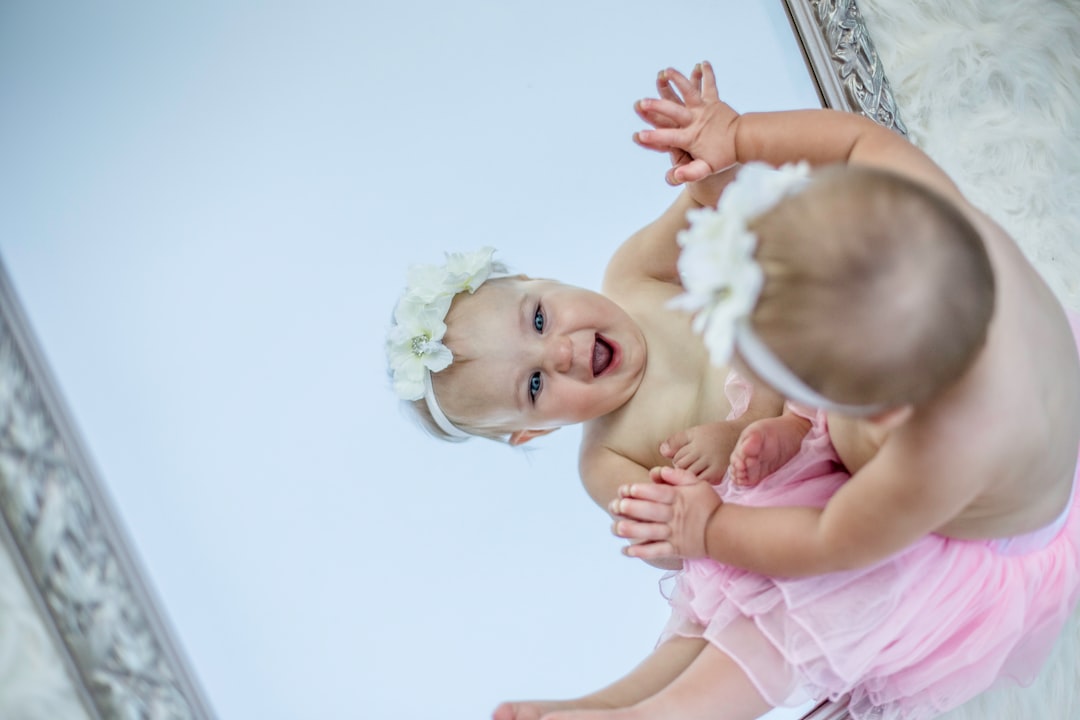
The interaction an infant has with a mirror is unique. Unlike interacting with a caregiver, the mirror offers an immediate, perfectly synchronized, and non-judgmental reflection of their own actions. This real-time feedback is invaluable for a developing brain.
Self-Recognition and Perspective-Taking
One of the most significant contributions of mirror exposure is its role in fostering self-recognition. Initially, an infant might treat their reflection as another baby, smiling at it or reaching out. Over time, usually between 18 and 24 months, they begin to understand that the image in the mirror is them. This milestone, often assessed through the ‘rouge test’ where a mark is placed on an infant’s nose to see if they touch their own nose when looking in a mirror, signifies a crucial leap in self-awareness.
But the impact begins much earlier. Even before full self-recognition, infants learn through mirror play:
- Understanding Causality: They see their arm move, and simultaneously, the arm in the mirror moves. This reinforces the concept that their actions have consequences.
- Exploring Expressions: They can experiment with different facial expressions and observe the immediate feedback, linking internal feelings to external manifestations.
- Body Awareness: Mirrors help infants integrate their visual perception of their body with their proprioceptive sense (awareness of their body’s position in space).
This evolving understanding of self is a critical precursor to perspective-taking. To understand that someone else has a different viewpoint, an individual must first firmly grasp their own distinct identity and perspective. The mirror provides a safe, consistent environment for this fundamental learning.
From Self to Others: The Social Leap
The insights gained from mirror interaction are not confined to self-understanding; they ripple outwards to influence how infants perceive and interact with others. By understanding their own actions and reactions through reflection, infants develop a framework for interpreting the actions and reactions of others.
“The mirror acts as a foundational training ground, allowing infants to build a robust internal model of themselves, which then serves as a template for understanding the complex social behaviors of those around them.”
This process is thought to underpin the development of empathy and the ability to mimic. When an infant sees a caregiver smile, their brain might activate similar neural pathways that are engaged when they themselves smile, facilitated by the self-mapping learned through mirror play. This neural resonance is a cornerstone of social bonding and emotional understanding.
What This Means for Parents and Caregivers
While the research underscores the importance of mirror exposure, it’s crucial to remember that it is one piece of a much larger developmental puzzle. Direct, responsive interaction with caregivers remains paramount for healthy social and emotional development.
Encouraging Safe Mirror Play
For parents and caregivers, understanding the developmental benefits of mirrors can inform how they integrate them into an infant’s environment:
- Safe Placement: Ensure mirrors are shatterproof and securely affixed, or use soft, fabric-covered mirrors suitable for infants.
- Supervised Exploration: Always supervise mirror play, especially with very young infants.
- Interactive Play: Don’t just leave an infant with a mirror. Engage with them. Point to their reflection and name body parts. Make faces and encourage them to imitate.
- Balance: Integrate mirror play with other forms of social interaction, such as talking, singing, reading, and direct eye contact.
The goal is to provide rich, varied experiences that stimulate all facets of an infant’s burgeoning social capabilities. Mirror play can be a valuable complement to the warmth and responsiveness of human connection.
The Broader Scientific Context
Research into infant brain development is a dynamic and expanding field. Studies utilizing advanced neuroimaging techniques are continually revealing the intricate ways that early experiences shape neural architecture. The role of mirror exposure in shaping the social brain adds another layer of appreciation for the seemingly simple yet profoundly impactful interactions that occur during the earliest stages of life.
Understanding these mechanisms not only offers insights into typical development but can also inform interventions for children who might face challenges in social cognition. By appreciating the subtle influences on brain development, we can better support every child’s journey towards a rich and connected social life.
Explore more in our Digital Health coverage.
🔬 Scientific Takeaway
Early and regular exposure to mirrors appears to play a significant role in the development of an infant's social brain. This interaction aids in the crucial process of self-recognition, helping infants understand their own body and actions. This foundational self-awareness is believed to be a key stepping stone for developing more complex social cognition, including empathy and understanding others' perspectives.
Sources & References
Photo by Shot By Ireland on Unsplash.
Medical Disclaimer: This article is AI-assisted and reviewed by the Vitalheros editorial team. It is provided for informational purposes only and is not a substitute for professional medical advice, diagnosis, or treatment. Always consult a qualified healthcare provider. Reviewed by The Vitalheros Editorial Team.