Engineered T-Cells Offer Hope for Lasting Autoimmune Relief
Some links in this article are affiliate links. As an Amazon Associate and partner of other programs, Vitalheros may earn a commission from qualifying purchases, at no extra cost to you. This never influences our editorial coverage.
For millions worldwide, autoimmune conditions represent a persistent battle against the body’s own defenses. Diseases like rheumatoid arthritis, Crohn’s disease, and psoriasis are characterized by chronic inflammation, often driven by an overactive immune system. While significant strides have been made in managing these conditions, current treatments frequently demand lifelong commitment to repeated drug administration, posing challenges for patients and healthcare systems alike.
A groundbreaking study introduces a novel strategy that could fundamentally change this landscape: leveraging engineered T-cells, traditionally known for their role in cancer therapy, to provide a sustained, single-infusion solution for autoimmune inflammation. This innovative approach targets a crucial inflammatory molecule, tumor necrosis factor (TNF), promising a more durable and patient-friendly therapeutic future.
The Persistent Challenge of Autoimmune Inflammation
Tumor necrosis factor (TNF) is a cytokine, a type of signaling protein, that plays a vital role in initiating and regulating immune responses. In a healthy body, TNF helps fight infections and respond to injury. However, in autoimmune diseases, TNF production can become dysregulated, leading to chronic, destructive inflammation that damages tissues and organs.
Current therapies for TNF-driven autoimmune conditions often involve biologic drugs, such as monoclonal antibodies like adalimumab (Humira). These biologics work by neutralizing circulating TNF, effectively dampening the inflammatory cascade. While highly effective for many patients, they come with notable limitations:
- Frequent Administration: Due to their relatively short half-lives in the body, these drugs require regular injections, often bi-weekly or monthly, for sustained efficacy. This can be a significant burden on patients, impacting their quality of life and adherence to treatment regimens.
- Cost and Access: Biologic therapies are expensive, contributing to rising healthcare costs and sometimes limiting access for patients.
- Systemic Immune Suppression: While targeting excessive TNF, these treatments can also suppress normal, beneficial immune responses, potentially increasing susceptibility to infections.
The need for a more enduring, less burdensome, and potentially safer approach has long been a priority in immunology and geroscience research.
Repurposing CAR-T Technology: From Cancer to Chronic Inflammation
Chimeric Antigen Receptor (CAR)-T cell therapy has revolutionized cancer treatment, particularly for certain blood cancers. In this therapy, a patient’s own T-cells are genetically engineered to express a CAR, which allows them to recognize and attack specific antigens on cancer cells. The beauty of CAR-T cells lies in their ability to persist in the body for long periods, acting as a living drug.
The new research cleverly repurposes this powerful technology. Instead of targeting antigens on cell surfaces, these engineered CAR-T cells are designed to target soluble TNF in the bloodstream. The innovation lies in equipping the T-cells with a CAR based on the TNFR1 ectodomain — essentially, the binding part of the TNF receptor. This allows the engineered T-cells to specifically bind and capture circulating TNF.
A Self-Sustaining Cleanup Crew
What makes this approach particularly ingenious is its ability to provide continuous, sustained clearance of TNF. Unlike traditional biologics that are eventually metabolized and cleared from the body, these CAR-T cells act as a living, self-replenishing system:
- Upon binding TNF, the CAR on the T-cell undergoes receptor-mediated endocytosis, internalizing the TNF molecule.
- Crucially, the CAR-T cells continuously replenish their CARs on their surface, ensuring a steady supply of ‘receptors’ ready to capture more TNF.
This mechanism means the engineered T-cells can act as a persistent ‘cleanup crew,’ continually removing excessive TNF from circulation, independent of the body’s endogenous protein degradation machinery. This stands in stark contrast to the transient nature of current antibody-based therapies.
Overcoming Key Hurdles: Enhancing CAR-T Cell Longevity
A significant challenge in applying CAR-T technology to broader conditions, especially in immunocompetent individuals, has been ensuring the engineered cells can expand and persist effectively without requiring harsh pre-conditioning regimens (like chemotherapy) that are often used in cancer settings. Such pre-conditioning aims to make space for the infused T-cells but carries substantial side effects.
To overcome this, the researchers employed advanced gene-editing techniques. They utilized CRISPR technology to perform a double knockout of two specific genes, Bcor and Zc3h12a, within the engineered T-cells. This modification was critical for generating long-lived TNFR1-bearing T-cells that could persist in the body effectively without the need for pre-conditioning — a major step towards broader clinical applicability.
In mouse models of rheumatoid arthritis, a single infusion of these specially engineered T-cells demonstrated durable remission. This result is highly encouraging, suggesting a potential shift from chronic, repeated drug administration to a single-infusion intervention for inflammatory diseases.
A New Therapeutic Horizon for Chronic Conditions?
This research represents a significant advance in geroscience and therapeutic engineering, opening up exciting possibilities for the treatment of autoimmune and other chronic inflammatory conditions. The implications are profound:
- Reduced Treatment Burden: A single infusion could replace years of regular injections, dramatically improving patient convenience, compliance, and quality of life.
- Targeted and Sustained Action: The continuous, specific clearance of TNF by living cells offers a novel paradigm for managing chronic inflammation.
- Potential for Broader Application: The platform — a host-machinery-independent cellular targeted protein degradation system — could potentially be adapted to target other soluble factors or cytokines implicated in various diseases beyond autoimmune conditions.
While the results in mouse models are highly promising, it is crucial to remember that this is still early-stage research. Extensive human trials will be necessary to confirm safety, efficacy, and optimal dosing in people. Researchers will also need to carefully monitor potential long-term effects and ensure that the continuous clearance of TNF does not unduly compromise essential immune functions. Nevertheless, this study marks a compelling step forward, offering a glimpse into a future where chronic inflammatory diseases might be managed with revolutionary, long-lasting cellular therapies.
Explore more in our Longevity & Biohacking coverage.
🔬 Scientific Takeaway
Researchers have developed engineered CAR-T cells that can continuously clear soluble TNF, a key inflammatory cytokine, in mouse models of rheumatoid arthritis. By combining TNFR1 ectodomain-based CARs with CRISPR-mediated gene knockouts (Bcor/Zc3h12a) for enhanced T-cell persistence, a single infusion demonstrated durable disease remission. This approach represents a novel, host-machinery-independent cellular platform for sustained therapeutic protein degradation, potentially transforming chronic treatment regimens for autoimmune conditions.
Sources & References
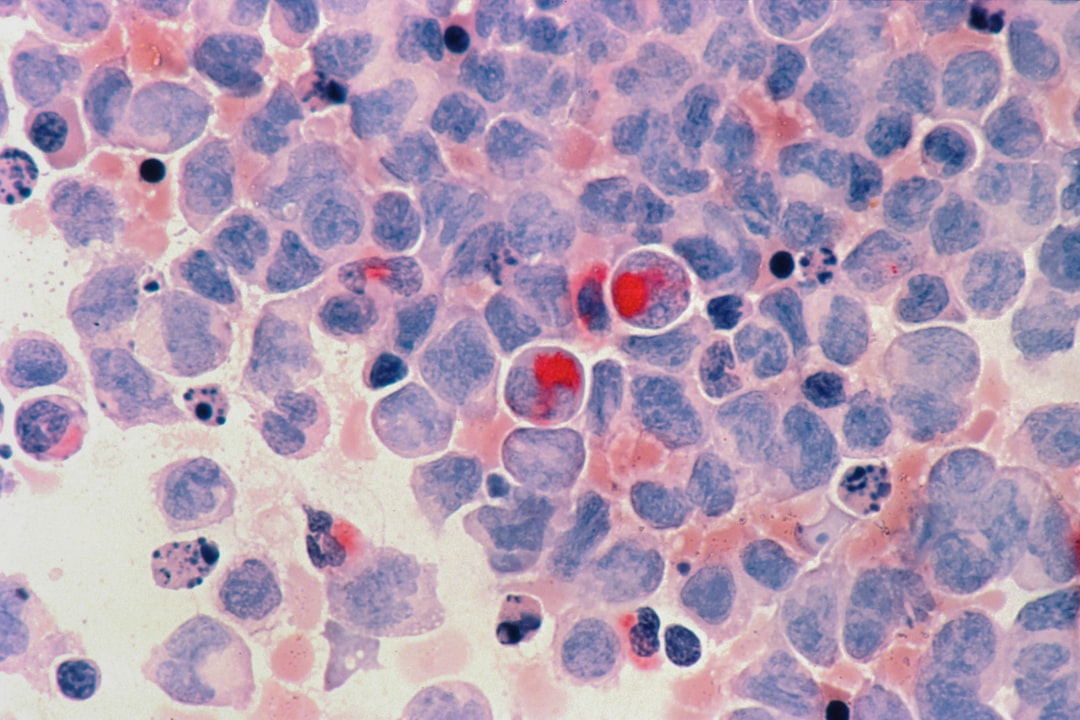
Photo by National Cancer Institute on Unsplash.
Medical Disclaimer: This article is AI-assisted and reviewed by the Vitalheros editorial team. It is provided for informational purposes only and is not a substitute for professional medical advice, diagnosis, or treatment. Always consult a qualified healthcare provider. Reviewed by The Vitalheros Editorial Team.