Unlocking Longevity: Multiple Metabolic Paths to a Longer Life
Some links in this article are affiliate links. As an Amazon Associate and partner of other programs, Vitalheros may earn a commission from qualifying purchases, at no extra cost to you. This never influences our editorial coverage.
The quest for a longer, healthier life has long captivated scientists and the public alike. For decades, a significant portion of fundamental aging research has focused on how we might subtly adjust metabolism to slow the aging process. This field, known as geroscience, delves into the biological mechanisms of aging with the ultimate goal of extending human healthspan.
It’s a well-established observation that many living organisms exhibit a remarkable plasticity in their lifespan when exposed to mild environmental stresses, such as calorie restriction, temperature fluctuations, or specific genetic alterations. These interventions often subtly recalibrate metabolic functions, leading to extended longevity in various model organisms.
However, the complexity of aging in higher organisms, including humans, presents significant challenges. While these metabolic adjustments offer intriguing insights, many researchers believe that such strategies, in isolation, may not yield breakthroughs that dramatically surpass the benefits of a healthy lifestyle and regular exercise. The gains in longevity from metabolic adjustment tend to diminish as species life span increases, suggesting a more intricate regulatory landscape in longer-lived creatures.
Despite these complexities, the scientific drive to fully comprehend the intricate details of aging persists. This fundamental research is crucial, not only for understanding longevity itself but also for identifying potential therapeutic targets for age-related diseases. A recent study exemplifies this enduring pursuit, providing compelling evidence that there isn’t just one singular path to metabolic adjustment for a longer life; rather, multiple distinct strategies may be at play.
The Intricate Dance of Metabolism and Longevity
Our metabolism is a finely tuned engine, converting food into energy and building blocks for our cells. Small changes in its operation can have profound effects on cellular health, stress resistance, and ultimately, lifespan. Historically, research in this area has often focused on specific pathways, like insulin/IGF-1 signaling or the effects of dietary restriction, both of which have been shown to extend lifespan in various organisms.
The concept of ‘metabolic plasticity’ underscores the ability of an organism’s metabolism to adapt to environmental cues, thereby influencing its longevity. From the simple yeast cell to the complex mammal, these adaptive responses are fundamental to survival. Yet, translating these observations into effective human interventions requires a deeper understanding of the underlying genetic and molecular networks.
One of the significant challenges lies in the sheer number of interacting pathways within a living system. Aging is not a singular process but a confluence of many biological changes, making it difficult to pinpoint specific interventions that will have a broad, beneficial impact without unintended side effects. This underscores the necessity of comprehensive, multi-pathway investigations, moving beyond single-gene or single-pathway studies.
Unraveling Longevity Pathways: A Genomic Deep Dive
To advance our understanding of aging beyond single pathways, researchers employed a sophisticated genomics approach. They focused on identifying genes that are regulated by multiple known lifespan-extending pathways, hypothesizing that commonalities across diverse longevity mechanisms might reveal core regulatory hubs.
For this investigation, the nematode worm C. elegans served as the primary model organism. This tiny worm is a cornerstone of aging research due to its relatively short lifespan, well-characterized genetics, and ease of manipulation, allowing scientists to rapidly test hypotheses about longevity. Importantly, many of the fundamental aging pathways discovered in C. elegans have conserved counterparts in humans, making findings in worms highly relevant for broader biological understanding.
The methodology involved performing RNA sequencing on nine different long-lived C. elegans mutants. These mutants represented seven distinct longevity pathways, each known to extend the worm’s lifespan through different mechanisms:
- Insulin/IGF-1 signaling: A fundamental pathway involved in growth, metabolism, and stress resistance.
- Dietary restriction: Limiting calorie intake without malnutrition.
- Germline deficiency: Absence or reduction of reproductive cells.
- Impaired chemosensation: Reduced ability to sense chemical cues.
- Reduced translation: Slower protein synthesis.
- Elevated mitochondrial reactive oxygen species (ROS): A surprising pathway where mild stress can induce beneficial adaptations.
- Mild mitochondrial impairment: Slight disruption of cellular powerhouses, often triggering compensatory protective responses.
By analyzing gene expression across such a diverse panel of long-lived mutants, the researchers aimed to uncover shared molecular signatures of longevity, rather than focusing on the unique effects of any single intervention.
More Than One Road to a Longer Life
The genomic analysis yielded fascinating results. The researchers found that most pairs of long-lived mutants exhibited a significant overlap in their differentially expressed genes – genes that were either significantly more or less active compared to normal worms. This suggested common regulatory changes were occurring across various longevity pathways.
Even more compelling was the discovery that comparing gene expression patterns across the entire panel of long-lived mutants revealed three distinct longevity groups. These groups could be clearly differentiated by their unique gene expression profiles, indicating that different combinations of metabolic adjustments can lead to extended lifespan.
Intriguingly, two of these groups showed modulation of specific genetic pathways in opposite directions. This finding strongly supports the idea that there are indeed multiple, alternative strategies to achieving long life, rather than a single, universal mechanism. It suggests that organisms can arrive at a similar outcome (extended lifespan) via different molecular routes, much like different roads leading to the same destination.
By filtering for genes that were similarly modulated (either upregulated or downregulated) in at least six of the nine long-lived mutants, the team identified a core set of 196 upregulated and 62 downregulated ‘aging genes.’ The upregulated genes were found to be significantly enriched in functions related to immunity, defense mechanisms, and metabolism. Conversely, many of the downregulated genes were involved in fundamental processes like translation (protein synthesis) and overall gene expression regulation.
Translating Insights: From Worms to Potential Therapies
Identifying these shared longevity genes is a crucial step towards understanding the fundamental biology of aging. But the research didn’t stop there. To assess the individual contribution of these commonly modulated genes, the scientists conducted further experiments.
They selectively ‘knocked down’ (reduced the activity of) some of the commonly upregulated genes in long-lived mutants and observed the resulting effect on lifespan. This approach allowed them to pinpoint several genes that, when individually manipulated, could influence the worm’s lifespan. Furthermore, the study demonstrated that simply increasing the activity (upregulation) of at least some of these identified genes was sufficient to enhance stress resistance and extend the lifespan of wild-type worms, which had not undergone any other longevity intervention.
These findings hold significant promise for the future of healthy aging research. Aging is recognized as the single greatest risk factor for a host of chronic conditions, including neurodegenerative diseases like Alzheimer’s and Parkinson’s. While the precise role of aging in the initiation and progression of these diseases is still being elucidated, previous work has shown that targeting aging pathways can be neuroprotective in animal models of neurodegenerative disease.
By gaining a deeper, more nuanced insight into the aging process through studies like this, scientists can identify novel therapeutic targets. The shared longevity genes uncovered in this work represent potential candidates for interventions aimed at promoting healthy aging and decreasing the incidence and severity of age-onset diseases, moving us closer to strategies that could extend not just lifespan, but also healthspan.
The Future of Healthy Aging Research
This research underscores the incredible complexity and adaptability of biological systems in the context of aging. It challenges the notion of a single ‘master switch’ for longevity, instead presenting a more sophisticated picture of multiple, interconnected pathways that can be modulated to influence lifespan.
While lifestyle choices remain foundational for healthy aging, fundamental geroscience research continues to unravel the intricate molecular mechanisms that underpin longevity. The identification of these shared longevity genes in C. elegans provides a valuable roadmap for future studies in more complex organisms, potentially paving the way for targeted interventions that promote robust health into advanced age. As our understanding of these diverse metabolic strategies deepens, so too does our potential to develop effective approaches for combating age-related decline and disease.
Explore more in our Longevity & Biohacking coverage.
🔬 Scientific Takeaway
A genomic study in C. elegans reveals that multiple distinct metabolic adjustments can extend lifespan, not just a single pathway. Researchers identified three distinct longevity groups based on gene expression and a core set of commonly modulated genes involved in immunity, defense, and metabolism, some of which individually enhanced stress resistance and lifespan. This suggests diverse molecular strategies for healthy aging and potential novel therapeutic targets for age-related diseases.
Sources & References
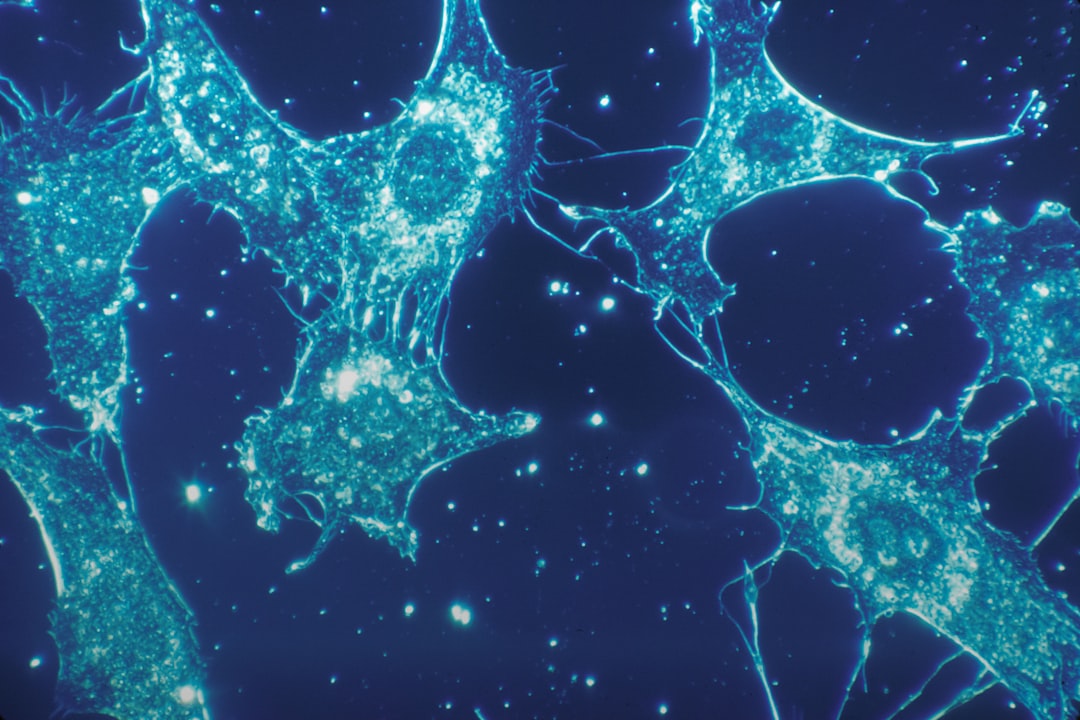
Photo by National Cancer Institute on Unsplash.
Medical Disclaimer: This article is AI-assisted and reviewed by the Vitalheros editorial team. It is provided for informational purposes only and is not a substitute for professional medical advice, diagnosis, or treatment. Always consult a qualified healthcare provider. Reviewed by The Vitalheros Editorial Team.