Wearable Robotics: A New Era for Restoring Hand Function
Some links in this article are affiliate links. As an Amazon Associate and partner of other programs, Vitalheros may earn a commission from qualifying purchases, at no extra cost to you. This never influences our editorial coverage.
The ability to grasp, manipulate, and feel the world through our hands is often taken for granted. Yet, for millions worldwide, conditions like stroke, spinal cord injury, or neurological disorders can severely impair hand function, dramatically impacting daily independence and quality of life. The quest to restore this vital capability has long been a focus of medical research, and now, advancements in wearable robotics are ushering in a transformative era.
The Intricate Challenge of Hand Function Loss
Our hands are marvels of biological engineering, capable of both immense power and exquisite dexterity. From the delicate act of threading a needle to the firm grip required to open a jar, hand function is integral to almost every aspect of our lives. When this function is compromised, even simple tasks become monumental challenges, leading to profound frustration and a significant loss of autonomy.
Traditional rehabilitation therapies, while crucial, often face limitations. They require consistent effort, can be time-intensive, and sometimes struggle to provide the sustained, precise assistance needed for individuals with severe impairment. The goal for many is not just to regain some movement, but to achieve functional independence – the ability to perform everyday activities without constant assistance.
Pioneering Wearable Robotics for Restoration
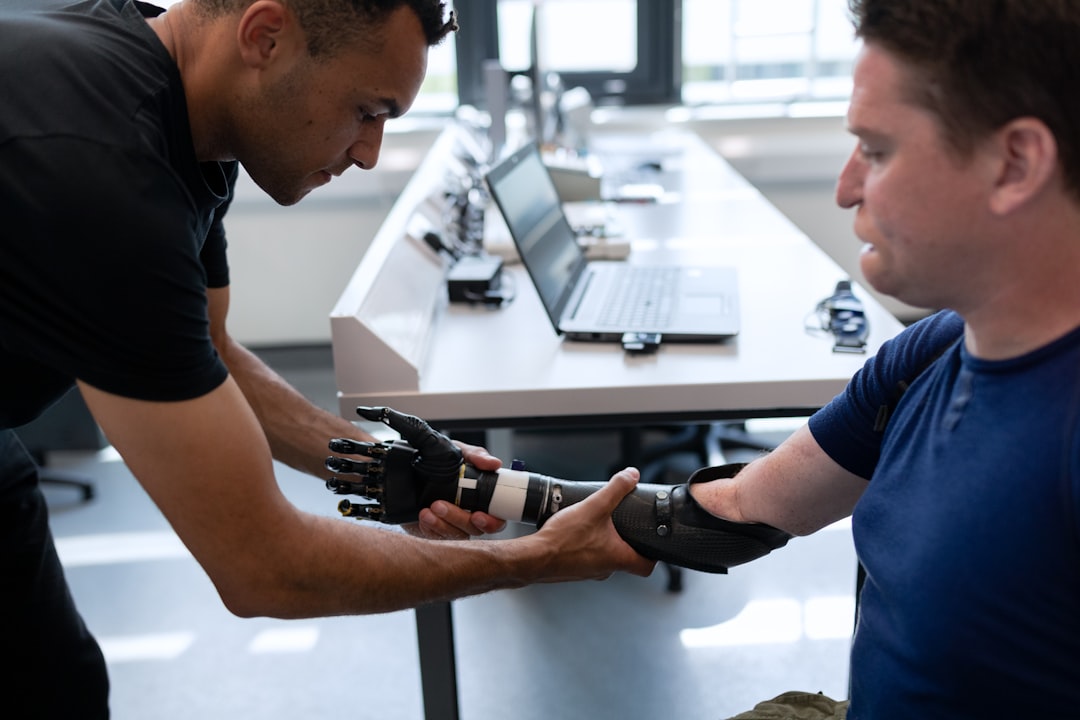
The development of wearable robotic systems represents a significant leap forward in addressing these challenges. These devices are not merely passive braces; they are sophisticated machines designed to work in concert with the user’s remaining capabilities, or even to initiate movement where none existed before. The core idea is to provide external support and power to assist the hand and fingers in executing movements that the user’s own muscles cannot perform adequately.
How These Systems Aim to Bridge the Gap
At their heart, these systems combine advanced engineering with principles of human physiology. Typically, a wearable robotic hand system consists of a lightweight, often flexible exoskeleton that fits over the hand and fingers. Integrated sensors detect the user’s intent – perhaps through subtle muscle signals (electromyography) or even brain signals – and translate these into commands for small motors or actuators embedded within the device. These motors then move the fingers and thumb, enabling grasping, pinching, and releasing actions.
Key innovations often focus on:
- Lightweight and Comfortable Design: To encourage prolonged use, the devices must be unobtrusive and allow for natural movement.
- Intuitive Control: The interface must be easy for users to learn and operate, responding seamlessly to their intentions.
- Adaptive Assistance: The system should ideally adjust its level of support based on the user’s current ability and the task at hand.
- Potential for Sensory Feedback: Some advanced systems aim to reintroduce tactile feedback, allowing users to ‘feel’ what they are touching, further enhancing control and immersion.
Beyond Traditional Therapies
While not a replacement for conventional physical and occupational therapy, wearable robotics can serve as a powerful adjunct. They can enable individuals to perform many repetitions of functional movements, which is critical for promoting neuroplasticity – the brain’s ability to reorganize itself and form new neural connections. By consistently practicing tasks with robotic assistance, users may gradually strengthen existing neural pathways or forge new ones, potentially leading to long-term improvements in voluntary control.
“The integration of intelligent robotics into rehabilitation holds the promise of fundamentally changing how we approach the recovery of lost function, offering a pathway to greater independence than previously imagined.”
A Glimpse into Enhanced Independence
The practical implications of effective wearable robotic hand systems are vast and life-changing. Imagine an individual who, post-stroke, struggles to hold a fork or brush their teeth, suddenly regaining the ability to perform these essential self-care tasks. The psychological benefits of such renewed independence cannot be overstated, leading to increased confidence, reduced reliance on caregivers, and a more active engagement with the world.
Beyond basic self-care, these systems could unlock opportunities for:
- Vocational Tasks: Enabling individuals to return to work or pursue hobbies that require fine motor skills.
- Social Participation: Facilitating interactions that involve hand use, such as shaking hands or playing board games.
- Therapeutic Engagement: Providing a consistent, motivating tool for home-based rehabilitation exercises.
The Path Forward: Research and Real-World Impact
While the promise of wearable robotics for hand function restoration is immense, the journey from laboratory to widespread clinical adoption involves rigorous steps. Extensive clinical trials are essential to validate the safety, efficacy, and long-term benefits of these systems across diverse patient populations. Researchers are continually refining designs, improving control algorithms, and exploring ways to make these devices more affordable and accessible.
The future likely holds even more personalized systems, perhaps integrating artificial intelligence to learn and adapt to individual user needs over time. As these technologies mature, they have the potential to become integral tools in neurorehabilitation, offering a renewed sense of hope and capability to those striving to regain command of their hands.
Explore more in our Digital Health coverage.
🔬 Scientific Takeaway
Recent scientific advancements are leading to the development of wearable robotic systems designed to restore hand function for individuals with neurological or traumatic impairments. These devices provide external support and assistance for grasping and manipulation, aiming to enhance independence and facilitate neuroplasticity through repetitive, functional movements. While promising, further clinical validation and accessibility improvements are crucial for widespread adoption.
Sources & References
Photo by ThisisEngineering on Unsplash.
Medical Disclaimer: This article is AI-assisted and reviewed by the Vitalheros editorial team. It is provided for informational purposes only and is not a substitute for professional medical advice, diagnosis, or treatment. Always consult a qualified healthcare provider. Reviewed by The Vitalheros Editorial Team.