The Science of Aging: Why Humans and Mice Age So Differently
Some links in this article are affiliate links. As an Amazon Associate and partner of other programs, Vitalheros may earn a commission from qualifying purchases, at no extra cost to you. This never influences our editorial coverage.
The quest to understand aging is as old as humanity itself. Yet, despite centuries of observation and decades of scientific inquiry, a unifying theory that explains the vast differences in lifespan across species – from a fruit fly’s mere weeks to a human’s many decades – has remained elusive. Why do some creatures age so rapidly, while others exhibit remarkable longevity? And what implications do these fundamental differences hold for our efforts to extend healthy human lifespan?
Recent research, leveraging sophisticated computational modeling, offers a compelling new framework to address these questions. By applying a ‘saturating removal model’ of biological damage accumulation, scientists have identified two distinct aging regimes that categorize species based on how their bodies manage the inevitable wear and tear of life. Crucially, this model places humans and mice into separate categories, providing a mechanistic explanation for why our aging processes, despite superficial similarities, operate on fundamentally different principles.
The Core Challenge: Modeling the Complexity of Aging
Aging is a complex, multifaceted process driven by an accumulation of cellular and molecular damage over time. This damage can manifest in various forms, from misfolded proteins and DNA mutations to dysfunctional mitochondria and senescent cells. While the specific types of damage may vary, the overarching principle is that the body’s ability to repair and maintain itself eventually falters, leading to functional decline, increased disease susceptibility, and ultimately, death.
Developing models to capture this complexity is essential. Such models, when used judiciously, can provide invaluable insights into which biological mechanisms are most critical in determining the pace of aging and overall lifespan. They allow researchers to test hypotheses and explore the ‘bounds of the possible’ in a way that would be impractical or impossible through purely experimental means.
A Simplified Look at Cellular Damage
The saturating removal (SR) model, central to this new research, simplifies the vast array of aging-related damage into a single, abstract ‘scalar x’. This ‘x’ represents the overall burden of damage that drives aging, and the model posits that life cannot persist once this damage level exceeds a certain threshold. While ‘x’ is an abstraction, its biochemical nature could vary by species – perhaps senescent cell load in mammals or membrane damage in bacteria.
Production, Removal, and Noise
The SR model describes the dynamics of this damage (x) using a stochastic differential equation, meaning it incorporates elements of randomness or ‘noise’ alongside predictable processes. Key components include:
- Damage Production: This factor increases linearly with age, reflecting the continuous generation of damage through normal metabolic processes and environmental exposure.
- Damage Removal: The body’s repair and clearance mechanisms work to counteract damage. However, the model suggests that this removal process ‘saturates’ at high levels of damage – meaning its efficiency tapers off as the damage burden becomes overwhelming.
- Noise: Random fluctuations in damage production or removal rates introduce an element of unpredictability, mirroring the inherent variability observed in biological systems.
This model has proven remarkably effective in explaining various quantitative patterns of aging, including the characteristic Gompertz and Weibull hazard curves (which describe mortality rates), distributions of human frailty indices, disease incidence patterns, and even the heritability of lifespan.
Unveiling Two Distinct Aging Regimes
Despite the similar underlying principles of damage accumulation, species exhibit lifespans that differ by orders of magnitude. By fitting the SR model to survival data from a wide range of well-studied species, researchers identified near-universal values for several parameters, such as ratios of removal rate, noise amplitude, and the death threshold. However, one parameter stood out as the best predictor of lifespan differences: the damage production rate, which varied across a staggering seven orders of magnitude.
This critical difference in damage production led to the identification of two distinct aging regimes:
Ballistic Aging: When Damage Outpaces Repair
In species characterized by ‘ballistic aging,’ the rate of damage production consistently outpaces the body’s ability to remove or repair it. Damage accumulates rapidly and inexorably, leading to a relatively short lifespan. This regime describes species such as:
- Yeast
- Nematodes (e.g., C. elegans)
- Fruit flies
- Mice
For these organisms, interventions aimed at significantly reducing damage production or dramatically boosting removal capacity would likely have the most profound impact on lifespan.
Quasi-Steady-State Aging: A Dynamic Balance
In contrast, ‘quasi-steady-state aging’ describes species where damage accumulation is more dynamically managed. While damage still occurs, the body’s removal and repair systems are more effective at keeping pace, leading to a state where damage levels track a moving ‘set point’ of balanced production and removal. This allows for a much longer lifespan, though eventually, the balance shifts, and damage accumulates beyond repair. This regime includes species like:
- Humans
- Dogs
- Guinea pigs
- Cats
For these species, maintaining the delicate balance between damage production and removal, and enhancing resilience to damage, may be more central to extending healthy longevity.
The Key Predictor: Damage Production Rate
The finding that the damage production rate is the single most important parameter predicting lifespan across species is profound. It suggests that the fundamental difference between a short-lived mouse and a long-lived human isn’t necessarily a radically different set of repair mechanisms, but rather a significantly slower rate at which damaging processes occur or are initiated in longer-lived species.
"The model parameter that best predicts lifespan is the damage production rate, which spans seven orders of magnitude."
This insight could help direct future research towards understanding the upstream biological processes that influence damage production, rather than solely focusing on downstream repair pathways.
Implications for Longevity Research
The distinction between ballistic and quasi-steady-state aging has significant implications for how we approach longevity interventions, particularly in the context of translating findings from model organisms to humans.
Bridging the Translational Gap
For decades, mice have been the workhorse of aging research. Yet, the consistent challenge has been translating promising mouse interventions into effective human therapies. This model provides a compelling, mechanistic reason for this translational gap. If mice primarily experience ballistic aging, where damage rapidly overwhelms removal, then interventions that dramatically slow damage accumulation might show spectacular results in mice. However, in humans, who operate in a quasi-steady-state, the challenges might be different – perhaps focusing more on maintaining the efficiency of removal systems or enhancing robustness to existing damage over very long periods.
This doesn’t invalidate mouse research, but it underscores the need for careful interpretation. An intervention that works by, for example, slightly boosting a repair pathway might have a more noticeable effect in a ballistic ager where that pathway is quickly overwhelmed, than in a quasi-steady-state ager where the pathway is already quite efficient.
Future Directions and Validation
This saturating removal model provides a powerful, mechanistic framework for comparative aging. However, as with all models, its predictions await experimental validation. Future research will need to:
- Identify the specific biochemical nature of ‘scalar x’ (damage) in different species.
- Experimentally measure damage production and removal rates across a broader range of organisms.
- Test interventions based on these predicted aging regimes to see if the model accurately forecasts their efficacy.
By understanding these fundamental differences in aging dynamics, scientists can develop more targeted and effective strategies to promote healthy longevity, moving beyond a one-size-fits-all approach to an era of precision geroscience.
Explore more in our Longevity & Biohacking coverage.
🔬 Scientific Takeaway
A new 'saturating removal model' of biological damage identifies two distinct aging regimes across species: 'ballistic aging' where damage production outpaces removal (e.g., mice), and 'quasi-steady-state aging' where damage tracks a dynamic balance (e.g., humans). The damage production rate emerged as the strongest predictor of lifespan differences, spanning seven orders of magnitude. This model-based distinction suggests that interventions effective in ballistic aging species might not directly translate to quasi-steady-state agers, underscoring the need for species-specific research strategies.
Sources & References
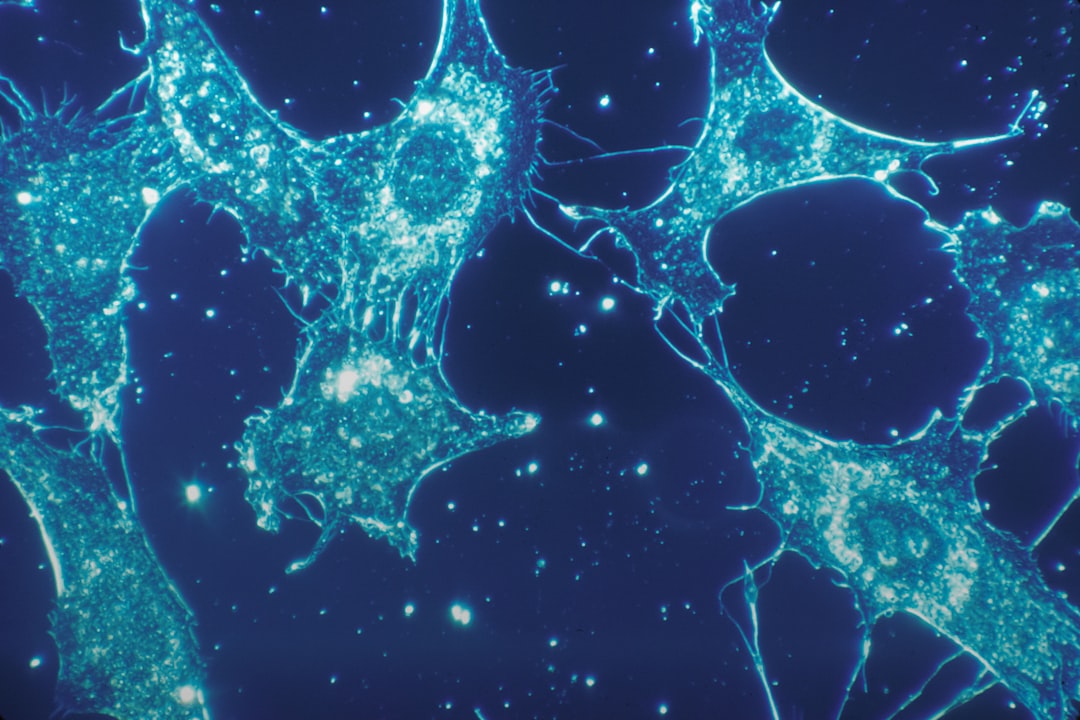
Photo by National Cancer Institute on Unsplash.
Medical Disclaimer: This article is AI-assisted and reviewed by the Vitalheros editorial team. It is provided for informational purposes only and is not a substitute for professional medical advice, diagnosis, or treatment. Always consult a qualified healthcare provider. Reviewed by The Vitalheros Editorial Team.