Mapping Cellular Senescence: A New Era for Human Longevity

Some links in this article are affiliate links. As an Amazon Associate and partner of other programs, Vitalheros may earn a commission from qualifying purchases, at no extra cost to you. This never influences our editorial coverage.
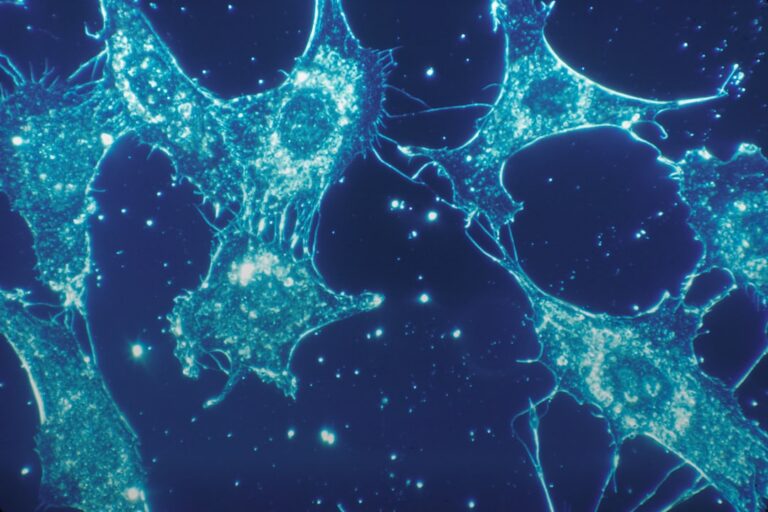
Aging, often perceived as an inevitable decline, is increasingly understood as a biological process influenced by specific cellular mechanisms. Among these, cellular senescence stands out as a critical driver. Imagine cells that, after experiencing stress or damage, stop dividing but refuse to die. These are often referred to as ‘senescent cells’ or, more colloquially, ‘zombie cells.’ They accumulate over time, particularly in older tissues, and secrete a cocktail of inflammatory molecules known as the Senescence-Associated Secretory Phenotype (SASP). This constant inflammatory signal can harm neighboring healthy cells, disrupt tissue function, and contribute to the development of numerous age-related diseases, from arthritis and cardiovascular issues to neurodegenerative conditions like Alzheimer’s.
For years, much of our understanding of cellular senescence came from laboratory cultures and animal models. While invaluable, these studies couldn’t fully capture the complexity of senescence within the human body. This gap in knowledge has been a significant barrier to developing effective therapies that target these problematic cells. However, a major scientific initiative, the National Institutes of Health (NIH) Cellular Senescence Network (SenNet), has now published its initial findings, representing a landmark effort to map human cellular senescence with unprecedented detail.
Understanding the “Zombie” Cells of Aging
Cellular senescence is a protective mechanism that can prevent damaged cells from becoming cancerous by halting their proliferation. However, when these cells persist rather than being cleared by the immune system, their beneficial role turns detrimental. The SASP they secrete includes pro-inflammatory cytokines, chemokines, growth factors, and proteases. This creates a chronic low-grade inflammatory state throughout the body, often termed ‘inflammaging,’ which is a hallmark of aging and a risk factor for many chronic diseases.
The Challenge of Senescence: More Than One Type?
One of the most profound revelations in senescence research is its heterogeneity. It’s becoming clear that not all senescent cells are alike. Their characteristics, the specific molecules they secrete, and their impact on tissues can vary significantly depending on the cell type, the initial trigger for senescence, the duration of their senescent state, and the surrounding tissue environment. This diversity has led researchers to coin the term ‘senotypes’ – distinct subtypes of senescent cells. Understanding these different senotypes is crucial, as a therapy effective against one type might not work against another, and some senescent cells might even play beneficial roles in specific contexts, such as wound healing or embryonic development.
Historically, characterizing these diverse senescent states in human tissues has been challenging. The limited availability of human samples and the technical complexities of identifying and profiling senescent cells at high resolution have constrained progress. This is precisely where the SenNet initiative aims to make a transformative impact.
Charting the Human Senescence Landscape: The SenNet Initiative
The NIH SenNet consortium was established to overcome these challenges by creating the first comprehensive human reference framework for heterogeneous senescent cell states. Its goal is to build a detailed ‘atlas’ of senescent cells across various human organs and tissues, providing the scientific community with the resources and tools needed to ask and answer fundamental questions about their influence on human aging and disease.
The initial wave of SenNet discoveries has begun to populate this atlas, examining tissues from healthy aging individuals as well as those affected by disease. Researchers have meticulously mapped senescent cells in a range of vital organs, including:
- Lymph nodes: Key components of the immune system.
- Lung parenchyma: The functional tissue of the lungs.
- Prefrontal cortex: A critical region of the brain involved in cognitive functions.
- Liver: An organ central to metabolism and detoxification.
- Chronic wounds: From aged skin, offering insights into impaired healing.
- And 14 other tissues, along with investigations into senescence during the COVID-19 pandemic.
By employing advanced techniques such as single-cell sequencing and spatial transcriptomics, SenNet is not only identifying which cells are senescent but also where they are located within tissues and what specific molecular signatures define their senescent state. This level of detail is essential for truly understanding the local and systemic effects of senescent cells in the human body.
From Map to Medicine: The Promise of Senolytics
The ultimate vision behind mapping senescent cells is to enable the development of precise diagnostics and highly targeted therapies. These therapies, known as senolytics, are designed to selectively eliminate senescent cells, thereby potentially reversing or mitigating age-related decline and chronic diseases.
Early Senolytics: Dasatinib and Quercetin
Among the most studied early senolytic combinations is dasatinib and quercetin (D+Q). In numerous preclinical studies, this combination has shown remarkable promise. For instance, in aged mice, even clearing a fraction of senescent cells has led to dramatic improvements in various age-related conditions, including enhanced physical function, reduced inflammation, and extended healthspan. The robust animal data has fueled significant optimism about their potential in humans.
However, the transition from promising animal data to established human therapies is a complex journey. While a few small academic clinical trials involving dasatinib and quercetin have been undertaken, the sample sizes have generally been too limited to draw definitive conclusions beyond suggesting that the results appear promising. Other compounds aiming to be senolytics have also faced challenges in clinical development, underscoring the need for more rigorous, larger-scale human trials and a deeper understanding of senescent cell biology in people.
Precision Medicine for Aging
The SenNet initiative represents a pivotal step towards a future where aging and age-related diseases are managed with greater precision. By creating a detailed blueprint of human cellular senescence, scientists can identify specific senotypes that are most detrimental in particular diseases or tissues. This knowledge can then guide the development of new diagnostic tools to identify individuals who would most benefit from senolytic therapies, and to design drugs that selectively target harmful senescent cells while preserving any beneficial ones.
“We envision that mapping senescent cells across human tissues will enable the development of precise diagnostics and senolytic therapies that selectively target harmful senescence while preserving its beneficial roles, transforming the management of aging and chronic diseases.”
This coordinated effort to decode the intricate landscape of human cellular senescence is not just an academic exercise; it is a foundational endeavor that could unlock novel strategies for extending not just lifespan, but crucially, healthspan – the period of life spent in good health. As the SenNet consortium continues its work, we move closer to transforming our approach to aging, shifting from managing symptoms to addressing its root cellular causes.
Explore more in our Longevity & Biohacking coverage.
🔬 Scientific Takeaway
The NIH SenNet initiative has launched the first comprehensive atlas of cellular senescence in human tissues, revealing the diverse 'senotypes' of these problematic 'zombie cells.' This detailed mapping is crucial for understanding how senescent cells drive aging and disease, and is expected to accelerate the development of precise diagnostics and targeted senolytic therapies to selectively clear them, potentially revolutionizing the management of age-related conditions.
Sources & References
Photo by Ousa Chea on Unsplash.
Medical Disclaimer: This article is AI-assisted and reviewed by the Vitalheros editorial team. It is provided for informational purposes only and is not a substitute for professional medical advice, diagnosis, or treatment. Always consult a qualified healthcare provider. Reviewed by The Vitalheros Editorial Team.